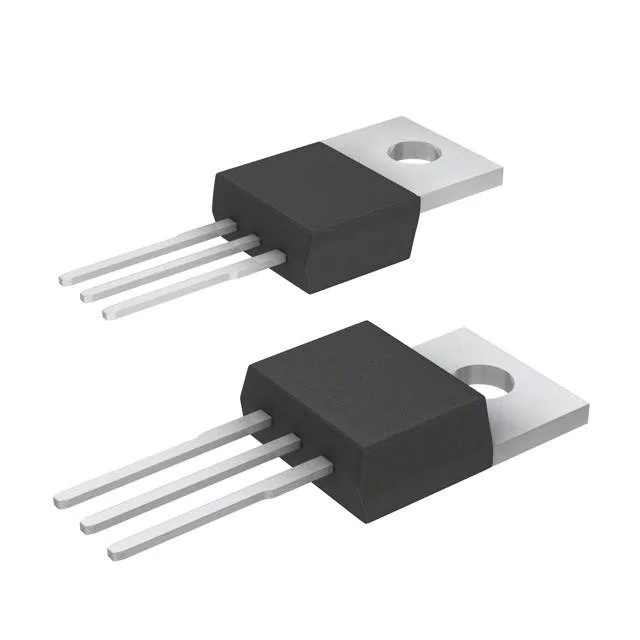
80 V, 120 A, 2.7 mOhm — the conduction-loss floor
Gate drive voltage is specified for both 6 V and 10 V, meaning the part can be driven from a standard 10 V gate-drive rail or a lower 6 V rail if the system is optimising for reduced gate-drive loss.
Thermal budget and switching speed
The total gate charge of 123 nC at 10 V tells the gate-drive designer how much current the driver must supply to hit the target switching frequency: a 123 nC gate switched at 100 kHz draws 12.3 mA average from the driver, well within a standard gate-driver IC's capability, but the peak current during the Miller plateau determines the actual switching time and crossover loss. Input capacitance Ciss is 8970 pF at 40 V drain-source — this capacitance dominates the gate-drive power at high frequency and sets the upper practical switching frequency before the driver's output impedance becomes the limiting factor.
The TO-220-3 package (PG-TO220-3) is a through-hole power package with a metal tab that must be soldered or bolted to a heatsink for the 214 W dissipation to be realised — the thermal resistance from junction to case is low, but the junction-to-ambient path without a heatsink will limit the part to a fraction of its rated current. The gate threshold voltage is specified at 3.8 V maximum at 154 µA drain current, so a 5 V logic-level gate drive will not fully enhance the channel — the part needs the 6 V or 10 V drive voltage stated for the rated Rds(on).