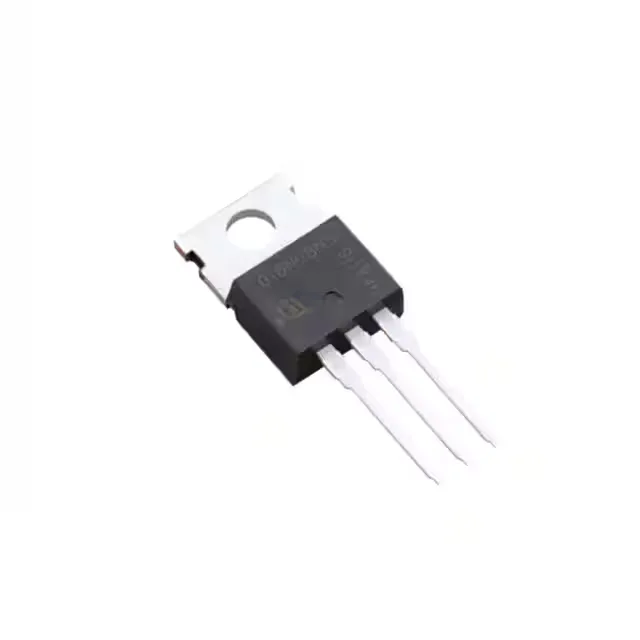
100 V, 2.6 mOhm — the conduction-loss number
Gate drive and switching — 154 nC at 10 V
The gate charge is 154 nC at 10 V, which sets the gate-driver power budget and the switching speed. With a Ciss of 7300 pF at 50 V drain-source, the input capacitance is moderate for a 100 V TO-220 part; expect a gate-driver capable of sourcing a few amps peak to get clean switching edges. The drive voltage range is 6 V to 10 V for minimum on-resistance — a 5 V logic-level drive will not fully saturate the device, so plan for a 10 V gate rail or a dedicated gate-driver IC.
175°C junction — under-hood and industrial thermal margin
That extra headroom matters for automotive under-hood environments, high-ambient industrial enclosures, or any design where the thermal loop has thin margin. The power dissipation numbers — 250 W at the case, 3.8 W in still air — reinforce that the TO-220 package must be bolted to a heatsink for any meaningful continuous power.
Through-hole TO-220 — standard power footprint
The PG-TO220-3 package is the standard three-lead through-hole power package. It accepts a clip-on or screw-mounted heatsink, and the lead pitch fits the common 0.1-inch grid. The mounting torque and thermal-interface material follow the usual TO-220 guidelines — no special handling beyond standard MSL precautions.
Active status, ROHS3 compliant
It is ROHS3 compliant.