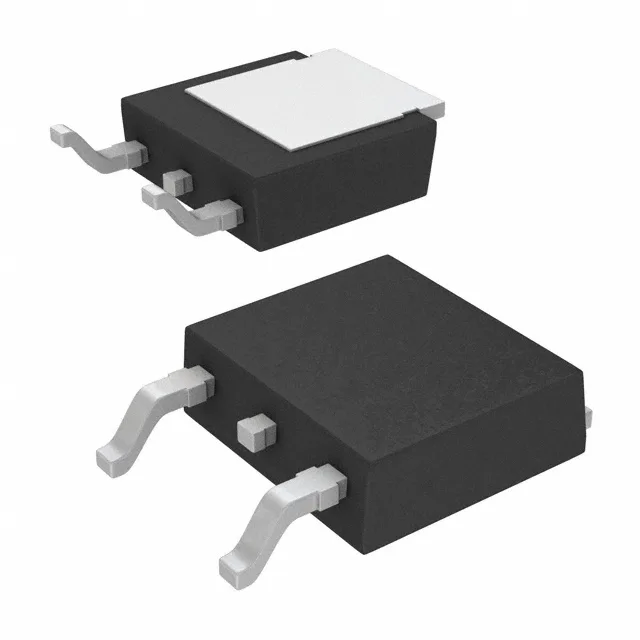
Infineon Technologies IPD80R3K3P7ATMA1

Infineon IPD80R3K3P7ATMA1 CoolMOS P7 N-Ch MOSFET, 800V, 1.9A

MPNIPD80R3K3P7ATMA1
End of Life

Infineon CoolMOS™ P7 series, IPD80R3K3P7ATMA1, N-Channel MOSFET, 800V Vdss, 1.9A Id, 3.3 Ohm Rds(on) at 10V, 5.8 nC Qg, TO-252-3 (DPak) package, -55°C to 150°C junction temperature.

$0.31736Ref. price · indicative, final on quote
PackagingTO-252-3, DPak (2 Leads + Tab), SC-63
RoHSROHS3 Compliant
SeriesCoolMOS™ P7
Independent supplier — new & surplus stockAuthenticity-screened · ESD-safe packingListing updated Jul 2026

Specifications

IPD80R3K3P7ATMA1 specifications
ParameterValue
SeriesCoolMOS™ P7
FET typeN-Channel
MountingSurface Mount
Drain to source voltage800 V
Drive voltage (Max rds on, min rds on)10V
Current - continuous drain (Id) @ 25°C1.9A (Tc)
Power dissipation18W (Tc)
Operating temperature-55°C ~ 150°C (TJ)
PackageTape & Reel (TR); Cut Tape (CT)
Vgs±20V
TechnologyMOSFET (Metal Oxide)
CaseTO-252-3, DPak (2 Leads + Tab), SC-63
Vgs(th) (Max) @ id3.5V @ 30µA
Rds on (Max) @ id, vgs3.3Ohm @ 590mA, 10V
Gate charge (Qg) (Max) @ vgs5.8 nC @ 10 V
Input capacitance (Ciss) (Max) @ vds120 pF @ 500 V

Product details

800 V CoolMOS P7 in a TO-252 — what it delivers for the offline supply

The Infineon IPD80R3K3P7ATMA1 is an 800 V N-channel MOSFET from the CoolMOS series, housed in a TO-252-3 (DPak) surface-mount package.

The total gate charge is 5.8 nC at 10 V, with an input capacitance of 120 pF measured at 500 V drain-source bias. The threshold voltage maxes out at 3.5 V at 30 µA drain current.

Thermal budget in a TO-252

Frequently asked questions

Is IPD80R3K3P7ATMA1 RoHS compliant?

Yes, the IPD80R3K3P7ATMA1 is ROHS3 compliant per the Infineon lifecycle record.

What is the difference between IPD80R3K3P7ATMA1 and IPP80R3K3P7?

The IPD80R3K3P7ATMA1 is the surface-mount TO-252 (DPak) variant, while the IPP80R3K3P7 is the through-hole TO-220 version. The die and electrical characteristics are identical — same 800 V Vdss, 3.3 Ohm Rds(on), 5.8 nC gate charge. The choice comes down to assembly method: reflow soldering for the DPak versus through-hole wave soldering for the TO-220. The thermal performance differs due to the package — TO-220 with a heatsink can dissipate more power than the DPak on a PCB copper land.