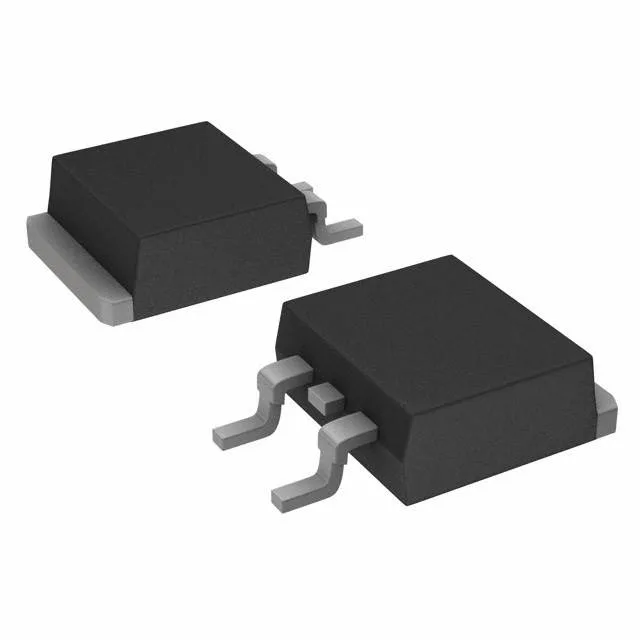
Automotive-grade power switch for high-current loads
It comes in a PG-TO263-3 (D²PAK) surface-mount package and carries AEC-Q101 automotive qualification, making it a fit for under-hood power distribution, motor-drive bridges, and DC-DC converter stages where high current and thermal cycling are the norm.
That figure is specified at 25°C junction — expect it to roughly double at 175°C, so the thermal design should budget for ~7 mOhm hot resistance. The 140 nC total gate charge at 10 V means a gate driver capable of sourcing at least 1.4 A peak is needed to hit a 100 ns switching edge; a weaker driver stretches the switching loss window.