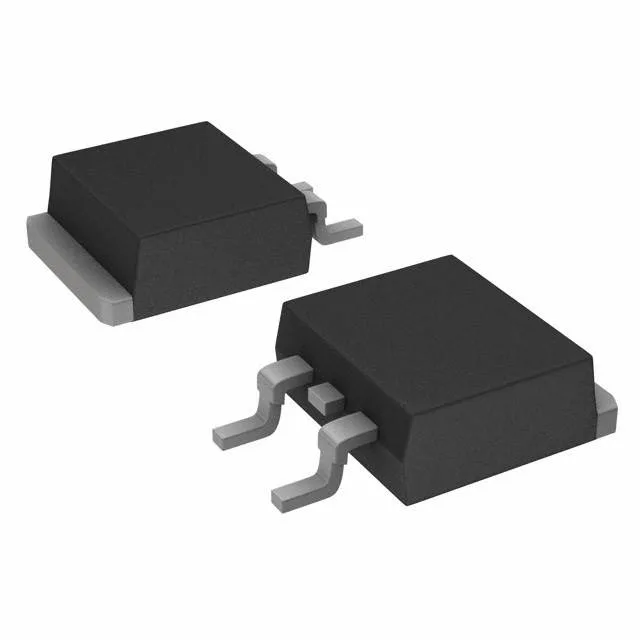
80 V rail with headroom — what the ratings mean
The 80 V Vdss rating puts this squarely in the 48 V bus and 60 V battery-voltage class with derating margin for transients. The 2 mOhm Rds(on) at 10 V means that at 100 A load the conduction loss is just 20 W — that keeps the junction rise manageable in a TO-263 package, provided the PCB copper area under the tab is sized for the 300 W power dissipation ceiling. Gate charge is 166 nC at 10 V. That is a moderate figure for a 120 A device — the driver needs to source about 1.66 A peak to hit a 100 ns switching edge. The input capacitance at 40 V drain is 12100 pF, which sets the Coss-related switching loss in a hard-switched converter. The gate threshold maximum is 3.8 V at 208 µA, so a 5 V logic gate drive will turn it on, but the 10 V drive is needed to reach the rated 2 mOhm. That makes it a candidate for under-hood automotive or high-ambient industrial enclosures where the case temperature can push past 125°C.
PG-TO263-3 package — rework and layout notes
The part comes in a PG-TO263-3 (D²Pak) surface-mount package. The large exposed tab is the drain — it needs a solid copper pour on the PCB with thermal vias to the backside plane to pull the heat out. The tab is also the primary electrical connection for the drain current, so the solder joint area must be void-free. Under a hot-air station the tab soaks heat; preheat the board to 125°C before attempting removal, and use a wide nozzle. The three leads are robust enough for hand rework if the tab is pre-tinned.
For dual-sourcing, the Infineon OptiMOS family includes other 80 V N-channel devices in the same package, but the 2 mOhm Rds(on) tier is specific to this variant — confirm the electrical spec before substituting.