What this clock generator does for your board
The IMIFS731BZB is a spread spectrum clock generator with an integrated PLL, designed to reduce electromagnetic interference (EMI) by spreading the output clock energy across a small frequency band rather than concentrating it at a single peak. It accepts a single CMOS or TTL input clock and delivers two buffered copies (1:2 ratio) at the same frequency, also in CMOS or TTL levels. The part runs from a 4.5V to 5.5V supply and is specified over the commercial temperature range of 0°C to 70°C.
Supply voltage and temperature — fit for the BOM
The 4.5V to 5.5V supply range means this part is strictly a 5V device. If your board runs on 3.3V, you will need a separate regulator or a different clock generator.
PLL and spread spectrum — the EMI play
The integrated PLL (yes, it is listed) is the active core that generates the spread-spectrum modulation. The spread-spectrum function is the main reason to pick this part: it reduces peak EMI emissions at the fundamental and harmonics, which can help pass FCC or CISPR radiated-emission tests without adding ferrite beads or shielding. The 1:2 fan-out gives you two synchronous copies of the input clock — enough to drive a small logic cluster or two loads, but not a multi-drop bus.
Package and handling — field-service friendly
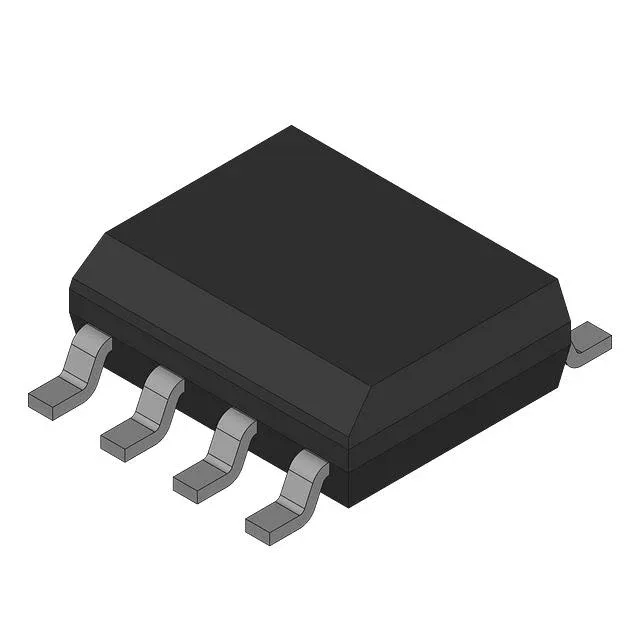
The 8-SOIC (0.154" wide, 3.90mm body) is a common, easy-to-solder footprint. No hot-air station needed — a standard soldering iron and some wick will swap it on site. Orientation is clear from the pin-1 notch. No special ESD precautions beyond the usual wrist strap.