Active lifecycle — no design-in hesitation
The FM25V02A-DGTR: That means you can drop it into a new BOM today without planning a respin for a replacement part next year.
256Kbit FRAM — why the SPI speed and endurance matter
This is a 256Kbit ferroelectric RAM organized as 32K x 8, accessed over an SPI bus at up to 40 MHz. Unlike EEPROM or NOR flash, FRAM writes at bus speed with no write-cycle delay — the 40 MHz clock is the actual throughput ceiling, not a page-buffer bottleneck. The non-volatile nature means data survives power loss without a battery or supercap. For a data logger writing every 100 ms, the 10^14 cycle endurance (typical for this FRAM family) outlives the product by decades — no wear-leveling needed.
Runs on a single 2V to 3.6V rail, so it sits comfortably on a 3.3V bus and can also drop into a 1.8V core-voltage domain without a separate regulator.
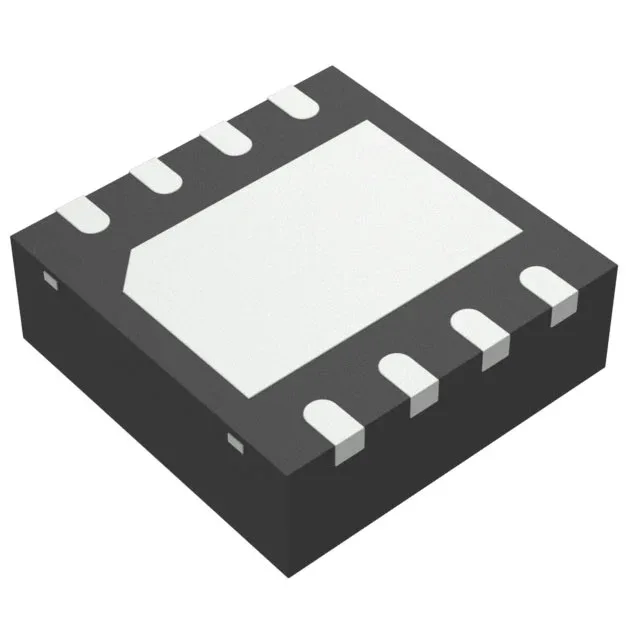
8-DFN package — layout and thermal note
Housed in an 8-WDFN with exposed pad, 4x4.5 mm body. The DFN footprint is compact enough for space-constrained designs but demands a solder-paste stencil aperture that covers at least 50% of the pad area to avoid voids.