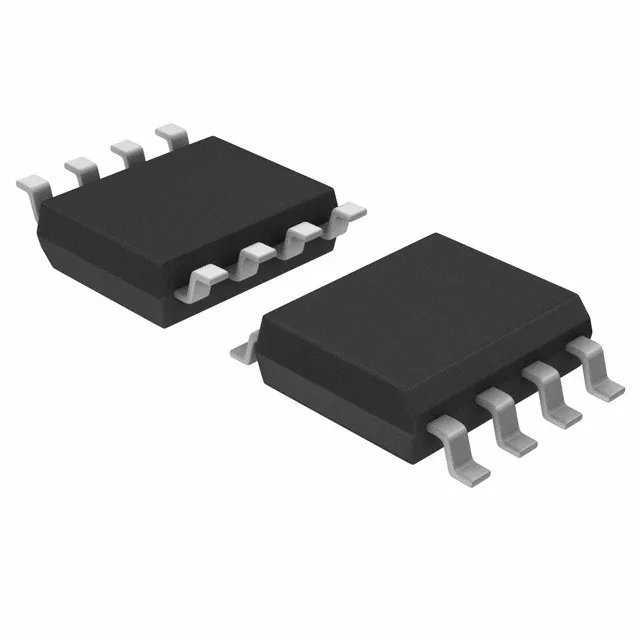
Why FRAM instead of EEPROM for this BOM line
The Infineon FM24V10-G is a 1 Mbit non-volatile F-RAM memory with an I2C interface clocked at 3.4 MHz and a 130 ns access time. What sets FRAM apart from EEPROM is write endurance: FRAM does not wear out with write cycles the way EEPROM does, so this part is a direct fit for applications that log data continuously or update configuration registers thousands of times per second without needing wear-leveling logic.
3.4 MHz I2C and 130 ns access — what they mean for throughput
The FM24V10-G supports I2C Fast-mode Plus at 3.4 MHz, which is the highest standard I2C speed grade. Combined with a 130 ns access time, this part can sustain write-heavy data logging without stalling the bus. For comparison, a typical 1 Mbit I2C EEPROM at 1 MHz would take roughly 2.5 seconds to write the entire array; this FRAM completes the same write in under 300 ms because it does not need the multi-millisecond write cycle that EEPROM requires. If your system logs sensor data or stores calibration tables that update frequently, this part eliminates the write-delay bottleneck.
Supply voltage and 3.3 V compatibility
The FM24V10-G operates from 2V to 3.6V, which covers both 3.3 V and 2.5 V logic rails. It is fully compatible with 3.3 V systems without needing a level shifter. The I2C bus pins are 3.6 V-tolerant, so a 3.3 V master can drive the SCL and SDA lines directly. This voltage range also suits battery-powered designs that run the memory from a 3.0 V or 2.8 V rail as the battery discharges.