PSoC 5 at 80 MHz — what the ARM Cortex-M3 brings to the 68-QFN footprint
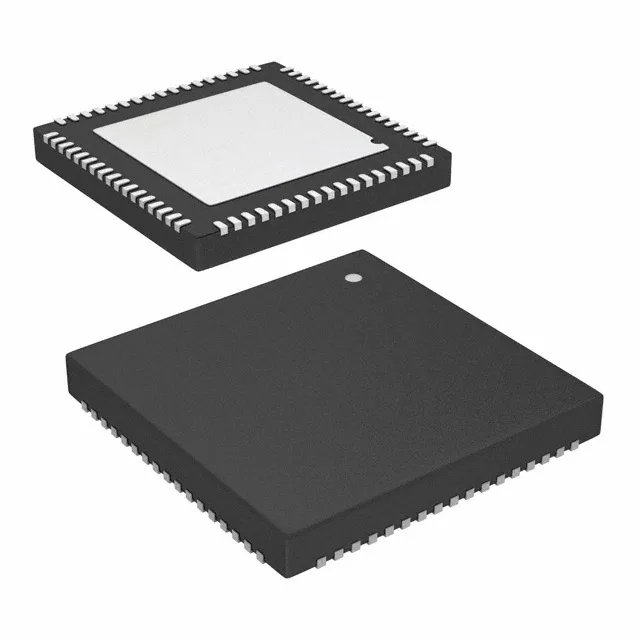
The Infineon CY8C5888LTI-LP097 is a 32-bit ARM Cortex-M3 microcontroller combining an 80MHz core with 256KB Flash and 64K x 8 RAM in a 68-QFN (8x8 mm) package. It carries an integrated 20-bit ADC, two 12-bit ADCs, and four 8-bit DACs, plus CapSense touch-sensing and LCD drive peripherals. The wide supply range from 1.71V to 5.5V lets it sit on either a 3.3V or 5V rail without a regulator change. Connectivity covers CANbus, I²C, LINbus, SPI, UART/USART, and USB — enough for a motor-drive CAN node with a local sensor bus and a USB programming/debug port. The 38 I/O count in the 68-QFN body keeps board routing manageable for a compact controller board, though the exposed pad demands a proper thermal via pattern if you draw sustained current through the I/O pins.
The 80MHz ARM Cortex-M3 handles a PID loop at several kHz while servicing USB and CAN interrupts — enough throughput for a medium-complexity motor drive or a multi-channel data logger. The 256KB Flash (256K x 8) holds a firmware image with a TCP/IP stack or a Modbus RTU library plus application code. 64K x 8 RAM supports moderate-sized buffers for sensor data or a display frame buffer. The 2K x 8 EEPROM is useful for calibration constants or configuration parameters that need field updates without wearing the Flash. If you need more than 38 I/O or a higher core frequency, the PSoC 6 CY8C6137BZI-F54 runs a Cortex-M4 at 150 MHz with 104 I/O — but that part moves to a different package and requires a board respin. For a design already laid out around the 68-QFN footprint, this part is the tier to lock.
Integrated analog and peripherals
The 20-bit ADC is a delta-sigma converter — it delivers the resolution for weigh-scale or thermocouple front-ends without an external ADC. The two 12-bit SAR ADCs handle faster signals like current-sense shunt monitoring. Four 8-bit DACs can set reference levels or drive analog outputs for a simple control loop. CapSense provides capacitive touch sensing for membrane-replacement buttons or sliders. LCD drive supports segment LCD panels directly. DMA offloads data movement between peripherals and memory without CPU intervention.
For the 68-QFN footprint, this part is the current-production option.