67 MHz 8051 — why the speed matters for the BOM
The 67 MHz core speed is the headline difference versus older PSoC 1 parts such as the CY8C29466-24PVXI, which tops out at 24 MHz. That clock advantage directly translates to tighter loop rates for the on-chip ADC and CapSense scanning — the 20-bit ADC can run at a higher oversampling rate without stalling the firmware thread. For a BOM decision, the 67 MHz 8051 means this part can handle a combined sensor read + CAN message + PWM update cycle in the same time window a 24 MHz part would need to drop a task.
20-bit ADC and analog front-end — no external converter needed
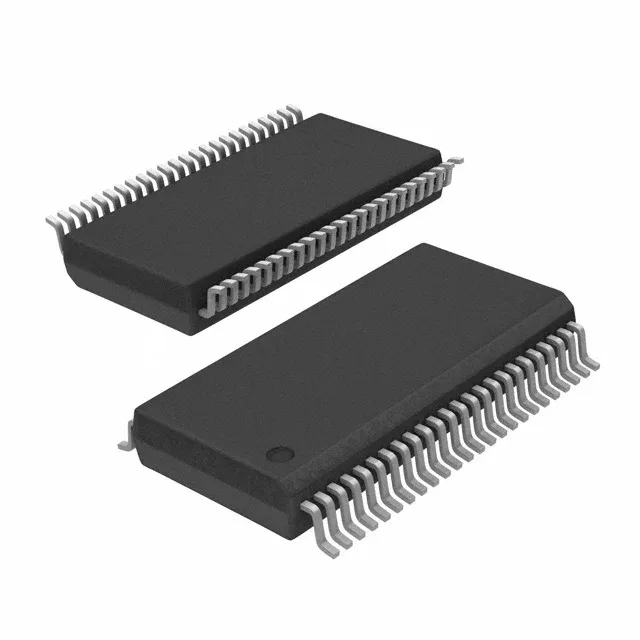
The 16-channel 20-bit delta-sigma ADC is the strongest analog feature on this die. The four 8-bit DACs cover auxiliary set-point or trim outputs. Combined with the internal oscillator, the chip can run a complete mixed-signal control loop with no external clock or converter IC — a single 48-SSOP package replaces what would otherwise be an MCU plus an ADC plus a DAC plus a CAN transceiver (external transceiver still required for the physical layer).
There is no last-time-buy window or NRND flag on this line. For a BOM freeze or a new-design qualification, this part does not carry the obsolescence risk that older PSoC 1 variants (CY8C29466-24PVXI, CY8C29566-24AXIT) may eventually face.