Synchronous FIFO with 8 ns access time — what that buys the bus
The Cypress CY7C4271V-10JXC is a synchronous FIFO memory organized as 32K x 9 bits (288K total), clocked at a 100 MHz data rate with an 8 ns access time. The 9-bit width accommodates an eighth data bit plus a parity or tag bit — common in telecom and datacom buffer applications where a ninth bit carries out-of-band signalling. The 8 ns access time means the read pointer updates within one clock cycle at 100 MHz, leaving margin for board trace delay and clock skew in a typical synchronous bus.
32-PLCC J-lead — rework-friendly, but check the footprint
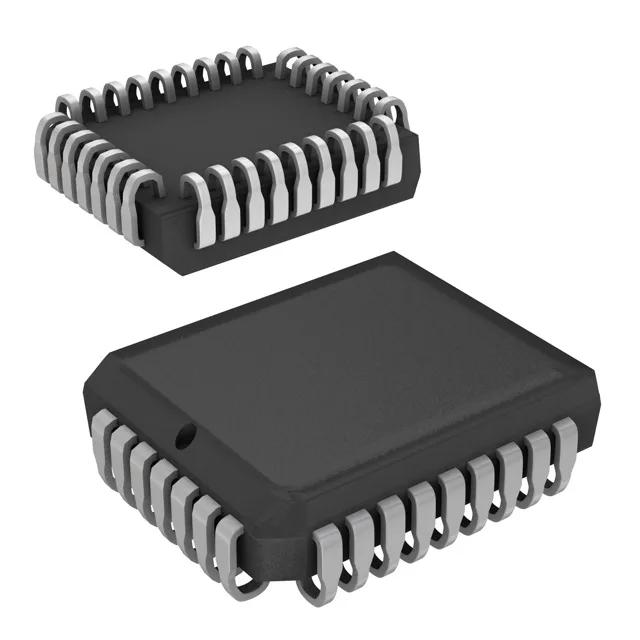
The 32-PLCC (J-lead) package is a through-hole-reflow hybrid that sits in a 32-LCC socket or solders directly to the board. J-leads are more forgiving under a hot-air station than QFN or BGA — the leads are visible and individually accessible for inspection and touch-up. The supplier device package measures 11.43 x 13.97 mm. Orientation is marked by a pin-1 chamfer on the package body, which is usually clear enough to reflow back without a struggle. The PLCC footprint is a legacy standard; verify your existing land pattern matches the J-lead pitch before committing a replacement board.
Cypress lists the CY7C4271V-10JXC as obsolete.
No FWFT — understand the read cycle
This FIFO does not support First Word Fall Through (FWFT). That means the first word written does not appear on the output bus until the first read clock edge after the empty flag de-asserts. In FWFT-capable parts the first word is available immediately without a dummy read. If your controller expects FWFT behaviour, the CY7C4271V-10JXC requires an extra read cycle to prime the output register — budget that latency in your timing analysis. Retransmit capability is also absent; once data is read it cannot be re-read from the internal pointer.
Programmable flags — one less external counter
Programmable flags are supported, letting you set almost-full and almost-empty thresholds via the flag-programming pins. This reduces the need for an external counter or FPGA to monitor fill level — the FIFO itself asserts the flag when the programmed depth is reached. Useful for flow control in a bursty data path where you need to throttle the source before the FIFO overflows.