66.7 MHz synchronous FIFO — what the timing numbers mean for your bus
The CY7C4241-15JXCT is a Cypress synchronous FIFO from the CY7C series, organized as 4K x 9 bits (36K total). The 10 ns access time leaves about 5 ns of setup-and-hold margin at 66.7 MHz on a typical 5 V bus, enough for most 74HCT or 3.3 V-tolerant logic families, but you'll want to check the input threshold levels against your controller's I/O if mixing supply voltages.
36K buffer depth — sizing the FIFO for your data path
With 36K bits organized as 4K words of 9 bits wide, this FIFO suits moderate-depth buffering applications — packet buffering in telecom line cards, rate-matching between asynchronous clock domains, or temporary storage in printer/imaging pipelines. The 9-bit width accommodates an 8-bit data byte plus a control/parity bit, common in older system buses. Depth expansion is supported by cascading multiple devices, and width expansion is possible by paralleling the control signals.
It draws a maximum of 35 mA. If your system runs at 3.3 V, you'll need level translation on the data and control lines.
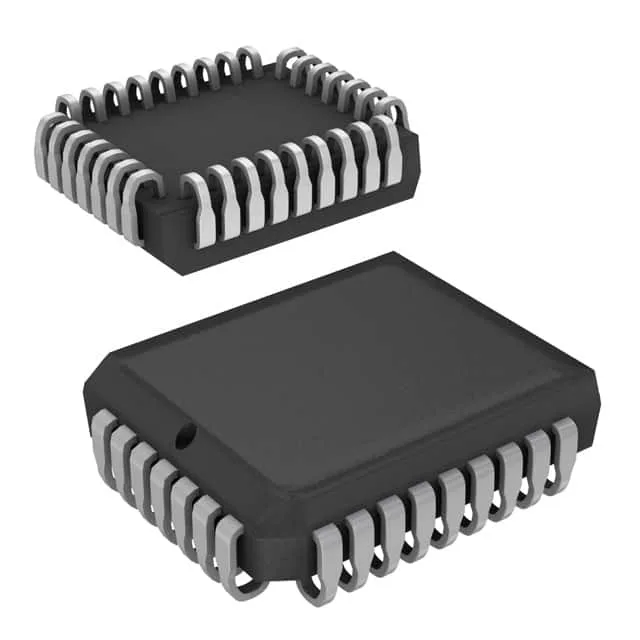
32-PLCC (J-Lead) package — rework and layout notes
Housed in a 32-lead PLCC with J-leads (body size 11.43 x 13.97 mm), this package is socket-friendly and reworkable with standard hot-air tools. The J-lead form gives a bit of compliance for thermal cycling, and the PLCC footprint is well-documented. The Tape & Reel suffix (CT) indicates it ships on 13-inch reels, typical for automated pick-and-place.
That means new-production allocations are gone; the only channel is independent distribution — surplus, new-old-stock, or broker inventory. If this part is on your BOM, you're looking at spot-market sourcing.