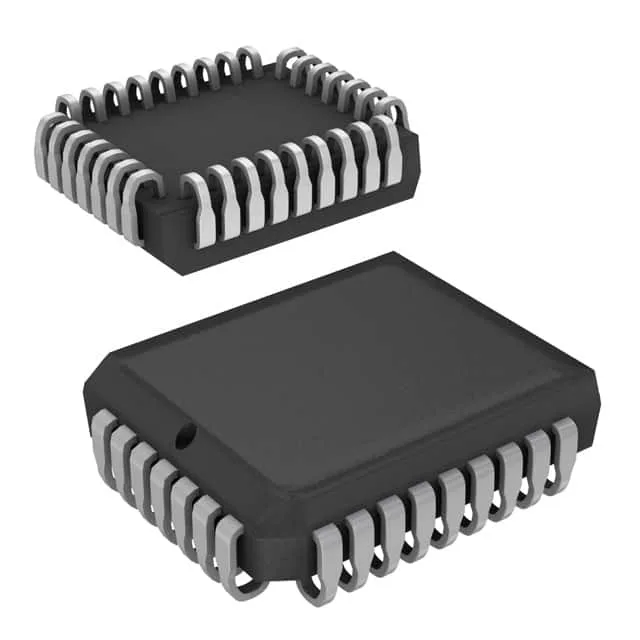
Synchronous FIFO in a 32-PLCC footprint — what this part is
The Cypress CY7C4211-15JXCT is a synchronous FIFO memory from the CY7C series, organized as 512 words by 9 bits for a total of 4.5 Kbits of storage. The part is designed for surface-mount assembly in a 32-lead PLCC J-Lead package (supplier device package 32-PLCC at 11.43x13.97 mm) and supports depth and width expansion for scaling buffer capacity.
66.7 MHz synchronous operation and 10 ns access — timing budget fit
The 66.7 MHz maximum clock rate and 10 ns access time define the timing envelope for this FIFO. In a synchronous system, the 10 ns access means the first word appears on the output bus within 10 ns of the read clock edge, which sets the setup-and-hold budget for the receiving logic. The 66.7 MHz data rate supports sustained throughput of 66.7 million words per second, assuming back-to-back reads with no dead cycles. For designs running at lower clock rates, the margin on access time relaxes accordingly, but the part is not rated for asynchronous (free-running) read operations — the synchronous clock must be present.
512 x 9 organization and expansion options
The 512-word depth by 9-bit width organization is a common FIFO configuration for 8-bit data paths with a parity or control bit. The 9th bit is often used as a data-valid flag, a parity bit, or a sideband control signal. Depth and width expansion are supported, meaning multiple CY7C4211 devices can be cascaded to create deeper or wider buffers — depth expansion chains FIFOs in series, while width expansion connects them in parallel with common control signals. The part includes programmable flags (almost-full, almost-empty thresholds) for flow control, but does not support retransmit or FWFT (First-Word Fall-Through) operation.
Cypress (now part of Infineon) no longer manufactures this specific ordering code in production volumes. Buyers should verify date code and condition requirements with their sourcing desk, as obsolete FIFOs on the spot market may carry mixed date codes or be sourced from inventory buyouts.