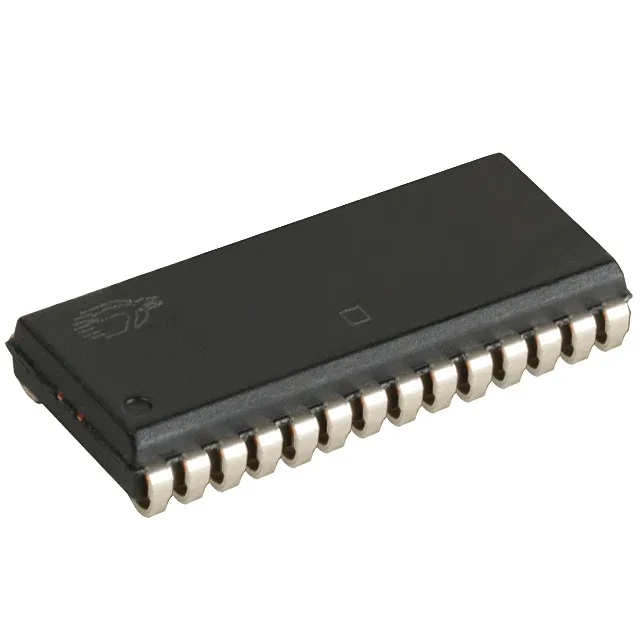
Asynchronous FIFO with 20 ns access — what the timing means for your bus
The Cypress CY7C421-20VXCT is a 4.5K (512 x 9) asynchronous FIFO memory from the CY7C series, designed for unidirectional data buffering between clock domains or bus-width-matching stages. Its headline timing spec is a 20 ns access time, which means the host controller sees valid data on the output bus within 20 ns of asserting the read enable — tight enough to avoid wait-state insertion with most 40–50 MHz asynchronous buses. The FIFO supports 50 MHz asynchronous operation, depth and width expansion, and retransmit capability, but does not include FWFT or programmable-flag logic. Typical applications include printer buffers, telecom line-card elasticity buffers, and industrial controller data queues where a simple asynchronous handshake is preferred over synchronous clocked FIFOs.
512 x 9 depth — sizing the buffer for your pipeline
The 4.5K memory is organized as 512 words of 9 bits each. The ninth bit is often used as a parity or flag bit alongside an 8-bit data word. For a 50 MHz write clock, 512 words provides about 10 µs of full-rate buffering before the FIFO fills — enough to absorb bursty data from an ADC or a parallel interface without overflow. If your pipeline needs deeper buffering, the expansion logic lets you cascade multiple CY7C421s in depth or width, though the lack of programmable flags means you manage the almost-full/almost-empty thresholds externally with counter logic.
Obsolete — sourcing this part today
Cypress (now part of Infineon) no longer manufactures this specific ordering code. The part is not available through the factory channel and has no official successor listed in the Cypress/Infineon product portfolio.
28-SOJ package — footprint and rework notes
The device is supplied in a 28-lead SOJ package — Small Outline J-lead, 0.300-inch body width, 7.62 mm. The J-lead form factor is surface-mount but requires a specific footprint with the J-bend landing pads. For rework, the J-lead package is less forgiving than gull-wing SOIC — the leads tuck under the body, so hot-air profiles need a bottom-side preheat to avoid solder bridging under the package.