It clocks at 550 MHz, delivering back-to-back read/write throughput without dead cycles — the kind of bandwidth needed in network packet buffers, telecom line cards, and high-end signal processing where the bus can't stall.
At 550 MHz the DDR II+ interface transfers data on both clock edges, so the effective data rate is 1.1 G transfers per second per pin. For a 36-bit-wide bus that works out to roughly 4.95 GB/s of raw bandwidth. Board-level signal integrity — trace impedance, stub length, and VTT termination — becomes the limiting factor, not the SRAM itself.
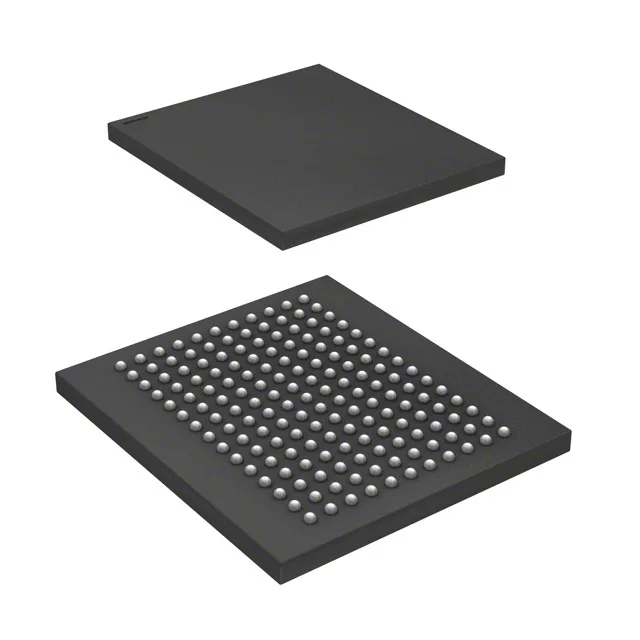
The 165-FBGA (15x17 mm) body uses a 1.0 mm ball pitch. That's a standard BGA footprint for high-density memory — no micro-via needed, but the escape routing on a 4-layer board will be tight. The Tray shipping medium is the factory-default for BGA devices; reels are available on alternate order codes if pick-and-place volume justifies it. Surface-mount only, MSL level per Cypress standard for this package family.