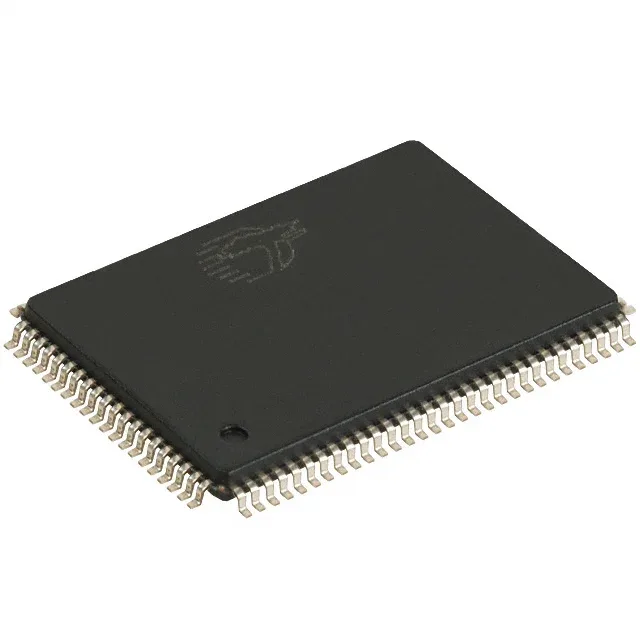
The 100-TQFP (14x20 mm) surface-mount package places it in high-throughput data-path roles — typically network buffers, telecom line cards, or cache memory in embedded systems where deterministic read/write latency matters more than density.
At 167 MHz (6 ns period), that leaves roughly 2.6 ns for PCB trace delay, input setup, and hold — tight but workable with proper signal-integrity layout. The synchronous SDR architecture eliminates dead cycles on back-to-back reads compared to asynchronous SRAM, which matters when the bus is running near its limit. If your design already runs a 166 MHz or 133 MHz memory bus, this part drops in without re-timing the controller.
2M x 36 organization — wide-word bus fit
The 2M depth by 36-bit width is not a standard 8/16/32-bit memory; it targets systems with a 36-bit data path — common in networking ASICs, telecom framers, or DSP arrays that process 36-bit words (e.g., 32-bit data plus 4-bit parity or ECC). If your controller expects a 32-bit bus, you can tie the upper four data pins low or leave them unconnected, but the 36-bit width is the native fit. The 72 Mbit total density fills a 2M-word address space, so address lines are minimal for the depth.
Cypress no longer manufactures it; new orders go through independent distribution as surplus or last-time-buy inventory.