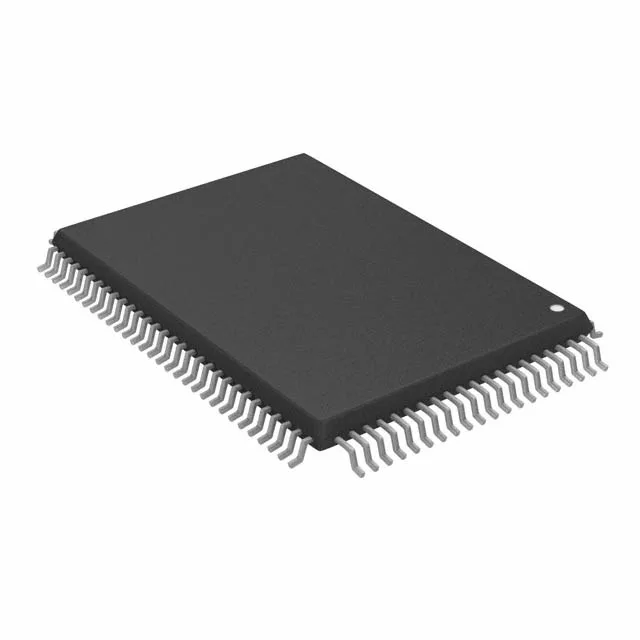
72 Mbit NoBL synchronous SRAM — what the 200 MHz clock and 3 ns access mean for bus timing
The CY7C1472BV33-200AXC is a Cypress NoBL (No Bus Latency) synchronous SRAM — 72 Mbit organized as 4M x 18, clocked at 200 MHz with a 3 ns access time. The NoBL architecture eliminates the dead cycle between read and write turns on the same port, so the bus controller sees back-to-back throughput at the full clock rate. For a system architect sizing a high-bandwidth data buffer — typically in network switches, base stations, or test equipment — the 200 MHz clock sets the peak transfer rate; the 3 ns access time is the window from clock edge to data-valid on the pins, which governs the setup-and-hold margin the PCB trace delay must fit within.
Commercial temperature range — where it can and cannot go
That is a commercial-grade window — fine for a lab instrument, a telecom rack in a climate-controlled room, or a test head. Do not plan this part for an outdoor base station, a motor drive cabinet, or any environment where the ambient can push past 70°C. The 0°C lower limit also rules out cold-start scenarios below freezing; if the system must boot at −20°C, this part is not the fit.
Cypress (now Infineon) no longer manufactures this exact variant. The buyer filling a BOM line for a legacy design will need to source through the surplus and broker channel. The page does not carry a validated second source, so qualification of any alternate falls to the buyer's engineering team.