Any remaining stock in the channel is new-old-stock or surplus inventory. There is no factory lead time to rely on, so verify stock before committing the line.
250 MHz DDR II — what the clock rating means for throughput
This is a synchronous DDR II (Double Data Rate) SRAM, meaning data transfers on both rising and falling edges of the 250 MHz clock. The effective data rate is 500 MT/s per pin. The 1M×18 organization gives 18 data I/O lines, so the peak bandwidth is 9 Gbit/s (500 MT/s × 18 bits). That throughput class suits high-speed buffer applications — network packet buffers, test equipment capture memory, or DSP coefficient storage — where the bus must sustain back-to-back reads and writes without dead cycles. The DDR II architecture eliminates the bus-turnaround penalty that single-data-rate SRAMs incur when switching from read to write.
Package and reflow — 165-ball FBGA on a 13×15 mm body
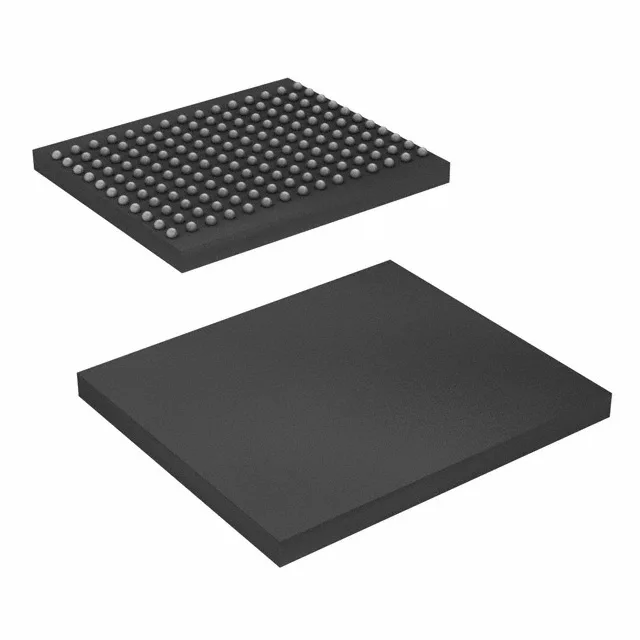
The 165-FBGA (13×15 mm) is a fine-pitch BGA. The tray shipping medium means the parts arrive in matrix trays, not tape-and-reel, so your pick-and-place feeder setup needs a tray feeder or waffle-pack adapter. The 1.7–1.9 V supply rail is separate from the I/O voltage — confirm your PCB regulator can deliver 1.8 V nominal at the required current, and place decoupling capacitors close to each supply ball pair.
That rules out outdoor telecom cabinets, engine bays, or any environment that sees freezing or sustained heat above 70 °C. If your system lives in a climate-controlled room — server rack, lab instrument, office networking gear — the temperature range is adequate. For industrial or extended-temperature applications, you would need a different variant (the CV18 family includes industrial-grade options, but this specific order code is commercial).