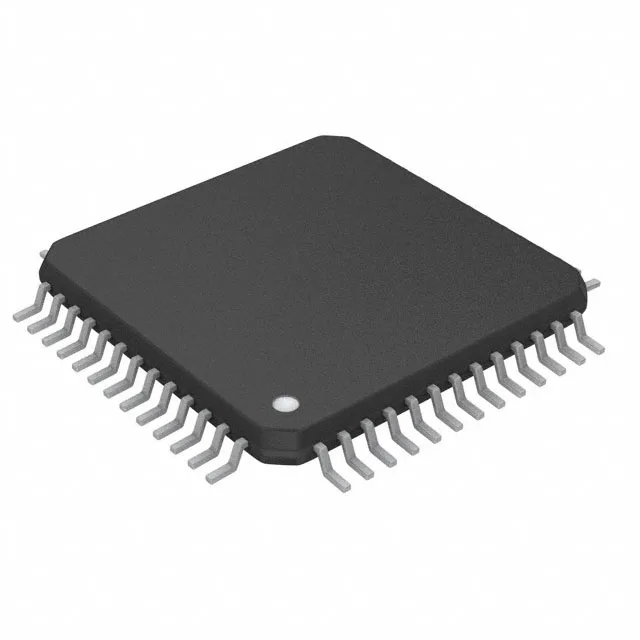
Obsolete dual-port SRAM — sourcing through independent channels
The CY7C131-55NXI is marked obsolete by Infineon Technologies — the original manufacturer no longer produces this device. A board-level redesign to a current-generation dual-port SRAM or a FIFO-based solution is the migration path for new builds.
55 ns dual-port architecture for shared-memory buffering
This is a 8Kbit (1K x 8) dual-port asynchronous SRAM with a 55 ns access time — the same figure applies to both read and write cycles. The dual-port topology lets two independent bus masters (e.g., a DSP and an FPGA, or two microcontrollers) read and write the same memory array without arbitration logic, provided they do not access the same address simultaneously. The 4.5V to 5.5V supply rail places this part firmly in the 5V logic era. Interfacing with 3.3V or lower-voltage cores requires external level translators on the address, data, and control lines. Industrial temperature range (-40°C to +85°C) qualifies it for factory-floor automation, telecom infrastructure, and outdoor-adjacent enclosures where ambient temperatures swing beyond the commercial 0-70°C band.
52-BQFP package — legacy footprint, rework considerations
Housed in a 52-lead BQFP (bumpered quad flat pack) with a 10x10 mm body — the supplier device package is 52-PQFP (10x10). The bumper bars at the four corners protect the leads from mechanical damage during handling and reflow. The fine-pitch (0.65 mm typical for this package class) demands careful solder-paste stencil alignment and a reflow profile that avoids tombstoning. Unlike a QFP with exposed leads, the bumper corners also complicate visual inspection of corner joints — X-ray or AOI is recommended for production verification. Supplied in tray format, not tape-and-reel — this is standard for BQFP packages and means pick-and-place feeders need a tray handler or a tube-to-tape conversion for high-volume lines.