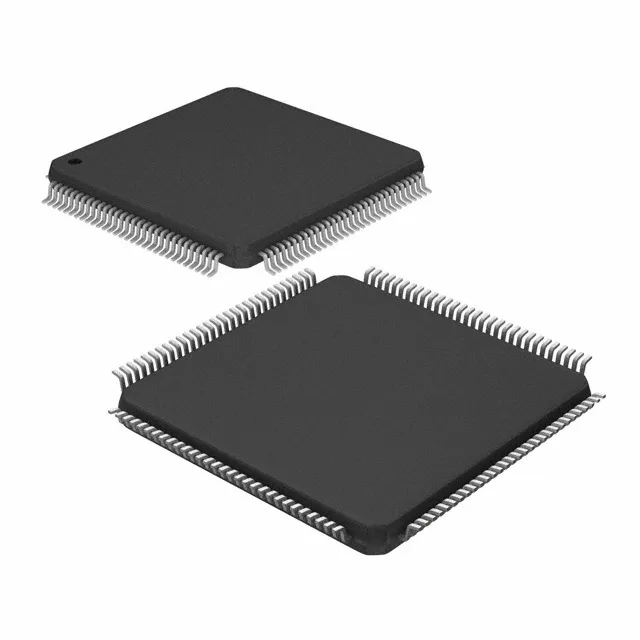
The Cypress CY7C0832AV-133AXC is a 4.5Mbit dual-port synchronous SRAM organized as 256K x 18 bits, clocked at 133 MHz. That 133 MHz synchronous interface means both ports can arbitrate and transfer data on every clock edge without dead cycles between reads and writes — critical for shared-memory designs where two processors or controllers need low-latency access to the same buffer. The x18 word width supports an 8-bit data byte plus a parity bit per port, or a 16-bit datapath with two parity/control bits, which is a common requirement in telecom line cards and baseband processing.
Obsolete — no direct replacement on record
This is a last-time-buy reality: if your board spins still require this footprint and timing, securing a lifetime buy quantity or qualifying a pin-compatible second source should be on the roadmap.
Package and temperature — fit for controlled environments
Housed in a 120-LQFP (also specified as 120-TQFP 14x14 mm), this is a surface-mount part with a 0.5 mm pitch — standard for fine-pitch assembly lines.
Where the 133 MHz clock matters in arbitration
At 133 MHz, the synchronous dual-port architecture gives each port a full clock cycle to arbitrate access to the memory array. This avoids the wait states and bus-turnaround penalties of asynchronous dual-port SRAMs. For designs that interleave read/write operations from two bus masters — think a DSP and an FPGA sharing a packet buffer — the 133 MHz clock keeps the arbitration latency under 7.5 ns per access. The parallel memory interface means all address, data, and control signals switch on the clock edge, so timing closure on the PCB is straightforward if the trace lengths are matched within a few hundred mils.