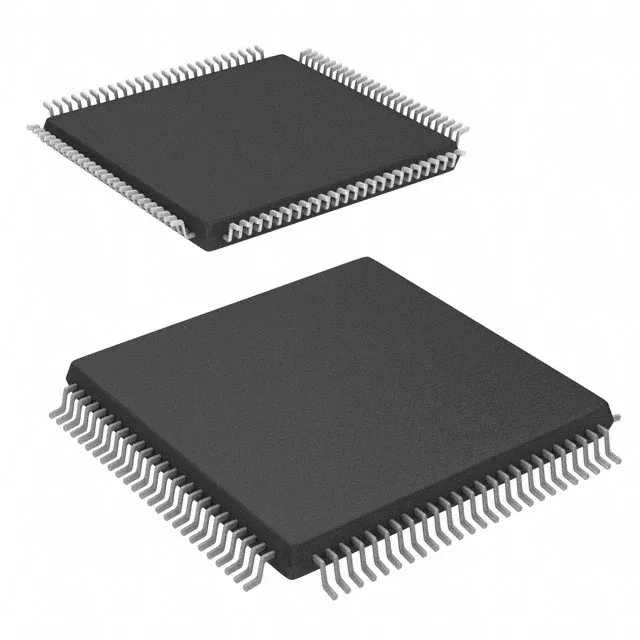
What this dual-port SRAM does that a single-port can't
The Infineon CY7C0241E-15AXCT is a 72Kbit dual-port asynchronous SRAM organized as 4K x 18. Its two independent ports let two bus masters — say a DSP and an FPGA, or two microcontrollers — read and write the same memory array without arbitration logic. The 15 ns access time on each port means a 66 MHz bus can grab data in one wait-state cycle, and the 15 ns write cycle time matches that pace for back-to-back writes. The 4K x 18 organization is a natural fit for 16-bit data buses with a parity bit, or for 18-bit wide FIFO-style buffers in telecom or industrial control cards.
On a 5V system running a 50 MHz bus (20 ns cycle), that leaves 5 ns of setup margin before the next clock edge — tight but workable with controlled impedance traces. The 15 ns write cycle time is the same figure, so page-mode writes don't penalise you. If your bus runs faster than 66 MHz, you'll need a pipelined or synchronous dual-port instead.
Infineon (formerly Cypress) no longer manufactures the CY7C0241E-15AXCT. The practical path is independent distribution — surplus inventory that was produced before the EOL date. If you're qualifying a new design, look at the active dual-port SRAM families from Infineon or Renesas that offer similar 4K x 18 or 8K x 18 configurations in a 100-pin TQFP footprint.
5V supply — still common in industrial and telecom backplanes
The supply range is 4.5V to 5.5V, so it runs happily on a 5V rail with ±10% tolerance. That's the same rail many legacy CPLDs, FPGAs, and DSPs still use. If your board has moved to 3.3V or 1.8V core logic, you'll need a separate 5V plane or a regulator just for this SRAM — something to budget for in the power tree. The 100-TQFP (14x14) package is a hand-solderable fine-pitch QFP; with a decent hot-air station and a fine tip, a rework tech can replace it without a full reflow oven.