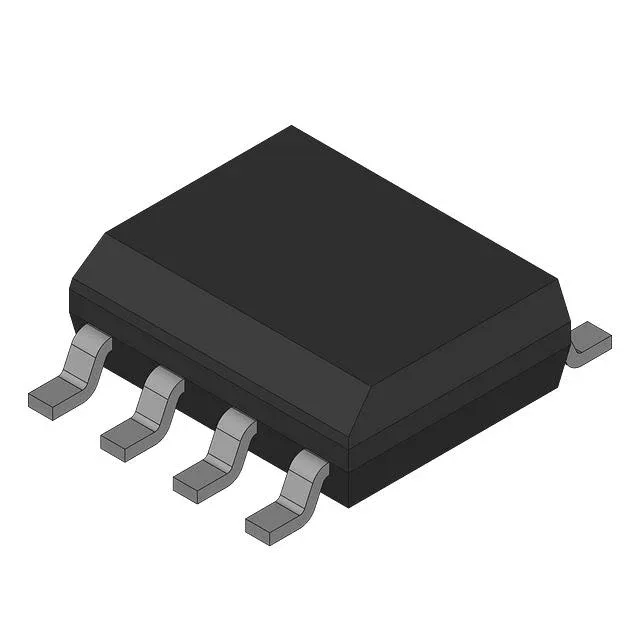
Spread-spectrum clocking — why it matters
Spread-spectrum modulation spreads the clock energy over a small frequency band, reducing peak EMI radiated from the clock trace and its harmonics. This is the primary reason to pick this part over a plain PLL clock buffer: it helps pass FCC/CE radiated-emission limits without adding ferrite beads or shielding cans. The trade-off is a slight increase in peak-to-peak jitter, which matters if the clock feeds a timing-critical ADC or SerDes — check the downstream jitter budget before committing the BOM.
It is RoHS non-compliant, which is a hard stop for any product sold into EU or other RoHS-regulated markets unless an exemption applies. For RoHS-required builds, look at the CY2305SXI-1HT as a functional alternative (same PLL clock-generator class, wider temperature range, RoHS-compliant), but verify pin-compatibility and output count — the CY2305 has a 1:5 input-to-output ratio versus the 2:2 ratio here.