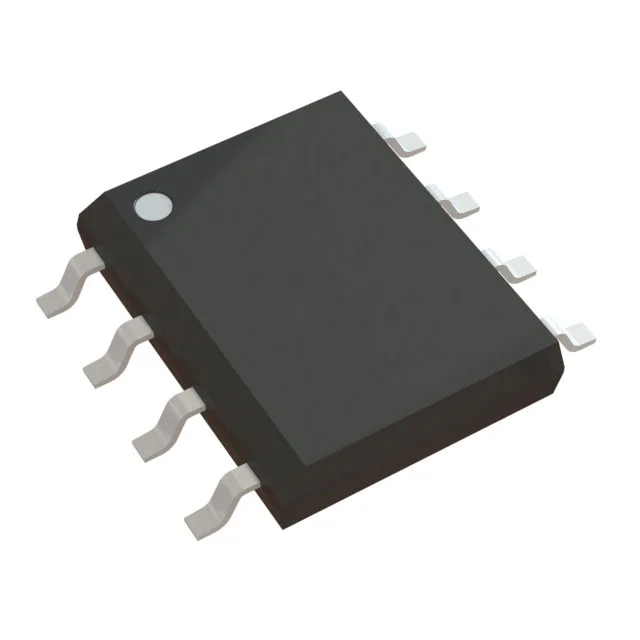
AEC-Q100 grade and the 150°C junction ceiling
The BTF3125EJXUMA1: That 150°C TJ(max) covers the under-hood ambient profile plus self-heating margin — a 2A continuous load through the 110 mOhm typical Rds(on) dissipates about 0.44W, which at 150°C junction leaves roughly 50°C headroom above a 100°C ambient in still air, assuming the exposed pad is soldered to a reasonable copper area.
Supply rails and fault protection
The load-side voltage range is 3V to 28V, while the logic supply (Vcc/Vdd) runs from 3V to 5.5V — this split-rail architecture lets the switch handle a 12V or 24V automotive battery bus while the control side stays at a standard 3.3V or 5V MCU logic level. The input is non-inverting and accepts a PWM interface, so the duty cycle maps directly to the output on-time. Integrated fault protection covers over-current, over-voltage, and short-circuit events. For a low-side switch driving an inductive load like a solenoid or relay, the over-voltage clamp catches the flyback spike without an external freewheeling diode — the switch self-limits the drain voltage during turn-off.
Package and thermal interface
Without that via pattern, the RthJA rises and the 2A continuous rating derates earlier than the 150°C junction limit would suggest.
Sourcing and compliance
Sourced through authorized and independent distribution; lead time and pricing confirmed at RFQ against the BOM quantity.