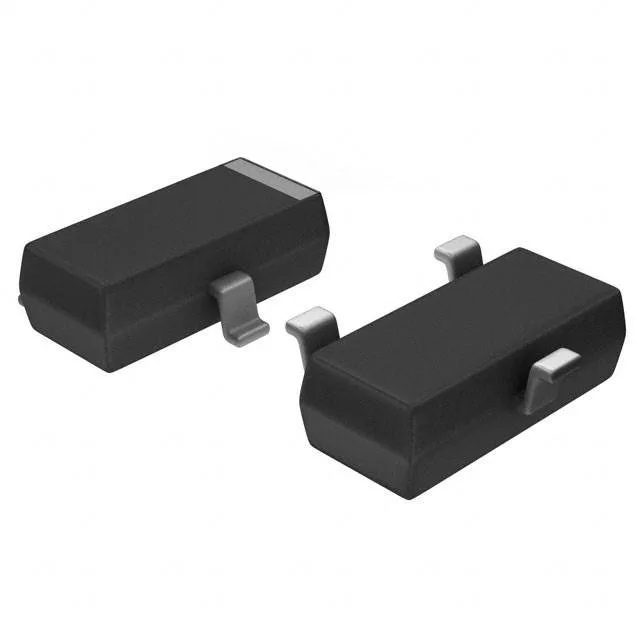
Infineon Technologies BSS84P-E6327 — Discrete Semiconductors

Infineon BSS84P-E6327 P-Channel MOSFET, 60V 170mA, SOT-23

MPNBSS84P-E6327
Obsolete

Infineon SIPMOS® BSS84P-E6327 P-Channel MOSFET, 60 V Vdss, 170 mA Id, 8 Ohm Rds(on) at 10 V, SOT-23-3 package, -55°C to 150°C junction temperature.

$0.3300Ref. price · indicative, final on quote
Independent supplier — new & surplus stockAuthenticity-screened · ESD-safe packingListing updated Jul 2026

Specifications

BSS84P-E6327 specifications
ParameterValue
SeriesSIPMOS®
FET typeP-Channel
MountingSurface Mount
Drain to source voltage60 V
Drive voltage (Max rds on, min rds on)4.5V, 10V
Current - continuous drain (Id) @ 25°C170mA (Ta)
Power dissipation360mW (Ta)
Operating temperature-55°C ~ 150°C (TJ)
PackageTape & Reel (TR)
Vgs±20V
TechnologyMOSFET (Metal Oxide)
CaseTO-236-3, SC-59, SOT-23-3
Vgs(th) (Max) @ id2V @ 20µA
Rds on (Max) @ id, vgs8Ohm @ 170mA, 10V
Gate charge (Qg) (Max) @ vgs1.5 nC @ 10 V
Input capacitance (Ciss) (Max) @ vds19 pF @ 25 V

Product details

The Infineon BSS84P-E6327 is listed as obsolete.

What this P-channel MOSFET is good for

The BSS84P-E6327 is a P-Channel enhancement-mode MOSFET from Infineon's SIPMOS® series. Gate charge is 1.5 nC at 10 V and input capacitance is 19 pF at 25 V.

The part comes in a standard SOT-23-3 package (PG-SOT23), which is a hand-solderable footprint with good community support for prototyping. Surface-mount only. Power dissipation is 360 mW at ambient — fine for signal-level loads; derate if you're pushing near the 170 mA continuous limit in a warm environment.

Frequently asked questions

Is BSS84P-E6327 obsolete?

Yes, the BSS84P-E6327 is listed as obsolete. It is no longer manufactured by Infineon. Procurement relies on surplus and broker inventory.

Can BSS84P-E6327 be used with a 5V gate drive?

Yes. Note that the 8 Ohm Rds(on) is specified at 10 V gate drive; at 4.5 V the on-resistance will be higher — check the typical transfer characteristic in the datasheet to confirm it still meets your conduction loss budget.