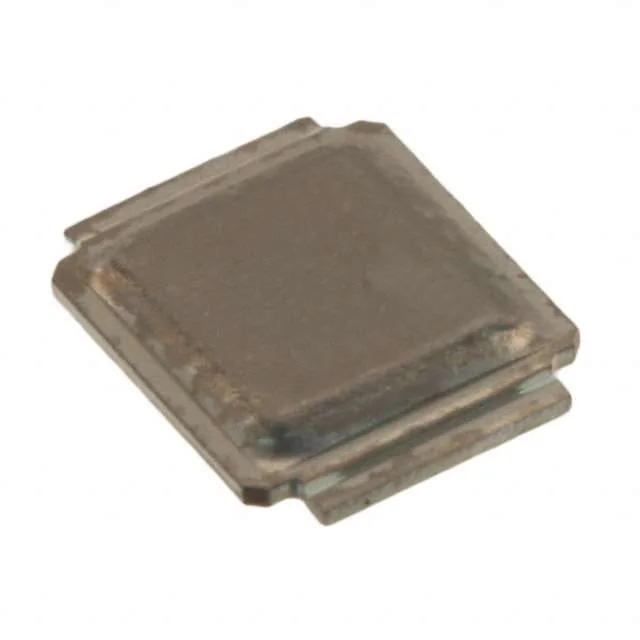
100V N-channel in a can — what the DirectFET package changes
The Infineon BSF134N10NJ3G is a 100V N-channel MOSFET from the OptiMOS family, built for switching applications where low conduction loss and a small footprint matter. The headline numbers are a 13.4 mOhm max on-resistance at 30A with 10V gate drive, and a continuous drain current of 40A when the case is held at 25°C — but that 40A figure assumes the DirectFET Isometric MX package is soldered to a board that can pull the heat away. At ambient still air, the same device is rated for 9A continuous. That gap tells you the thermal design is the real limiter, not the silicon.
Gate drive and switching — what the 6V / 10V split means
The drive voltage range is listed as 6V minimum for the lowest on-resistance, 10V for the rated maximum performance. That means a 5V logic-level gate signal will turn the device on, but the Rds(on) will be higher than the 13.4 mOhm spec — expect roughly double at 4.5V gate drive, so factor that into your conduction loss calculation if you are running from a 3.3V or 5V controller. Gate charge is 30 nC at 10V, which is moderate for a 100V part in this current class; a standard gate driver with a few ohms of series resistance will handle it cleanly. Input capacitance is 2300 pF at 50V drain-source.
Thermal and temperature — 150°C junction buys you margin
The 43W maximum dissipation at the case (Tc) versus 2.2W at ambient (Ta) reinforces the same point: this part needs a thermal path to a heatsink or board copper to deliver its rated current. The DirectFET package has a metal top that can be cooled with a heatsink or airflow — that is the advantage over a plastic-encapsulated SO-8. Power dissipation at 2.2W in still air is the number to use for a layout without dedicated thermal management.