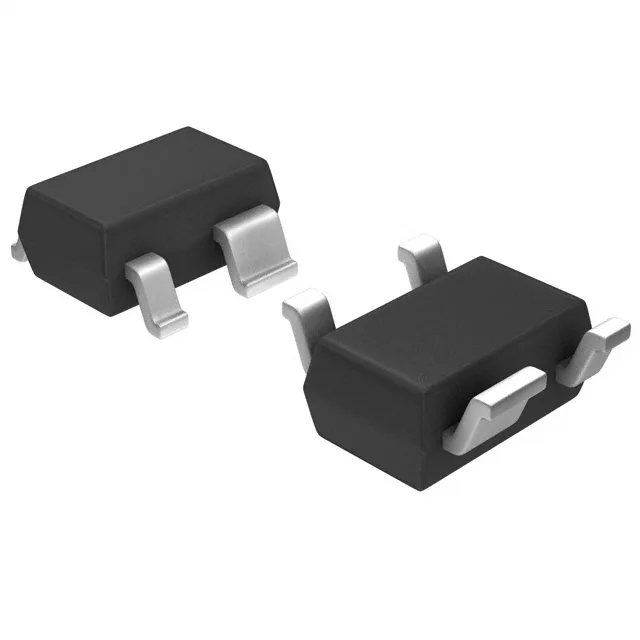
Infineon Technologies BFP840FESDH6327XTSA1 — Analog & Data Acquisition

Infineon BFP840FESDH6327XTSA1 RF NPN Transistor, 85GHz

MPNBFP840FESDH6327XTSA1
End of Life

Infineon BFP840FESDH6327XTSA1 NPN RF transistor, 85GHz transition frequency, 35dB gain, 0.75dB noise figure @ 5.5GHz, 2.6V Vce, 35mA Ic, 75mW max power, PG-TSFP-4-1 package, surface mount, 150°C junction temperature.

$0.51Ref. price · indicative, final on quote
Packaging4-SMD, Flat Leads
RoHSROHS3 Compliant
Independent supplier — new & surplus stockAuthenticity-screened · ESD-safe packingListing updated Aug 2026

Specifications

BFP840FESDH6327XTSA1 specifications
ParameterValue
MountingSurface Mount
FET typeNPN
Voltage - collector emitter breakdown2.6V
Current - collector (Ic)35mA
DC current gain (hFE) (Min) @ ic, vce150 @ 10mA, 1.8V
Power - max75mW
Frequency - transition85GHz
Operating temperature150°C (TJ)
Gain35dB
PackageTape & Reel (TR); Cut Tape (CT)
Case4-SMD, Flat Leads
Noise figure (dB typ @ f)0.75dB @ 5.5GHz

Product details

RF transistor for low-noise, high-gain front-ends

The BFP840FESDH6327XTSA1: NPN RF bipolar transistor in a PG-TSFP-4-1 package. Transition frequency of 85GHz and typical gain of 35dB.

Package and mounting for RF layout

The PG-TSFP-4-1 package is a 4-lead flat-lead SMD with a small footprint — the leads are coplanar with the body, which minimizes parasitic inductance and supports repeatable RF performance up to several tens of gigahertz. Surface-mount assembly is standard; the flat leads require a solder paste stencil aperture sized to the pad geometry in the Infineon application note. The device is rated for a junction temperature of 150°C, so thermal management is straightforward at the 75mW maximum power dissipation.

Frequently asked questions

Will BFP840FESDH6327XTSA1 drop into a board designed for BFP640FH6327XTSA1?

Both parts share the same PG-TSFP-4-1 package footprint and are NPN SiGe transistors, but the BFP840FESDH6327XTSA1 has a higher gain (35dB vs 23dB) and a higher transition frequency (85GHz vs 40GHz). The bias network and matching may need adjustment due to different S-parameters; a direct drop-in without circuit re-tuning is not guaranteed.