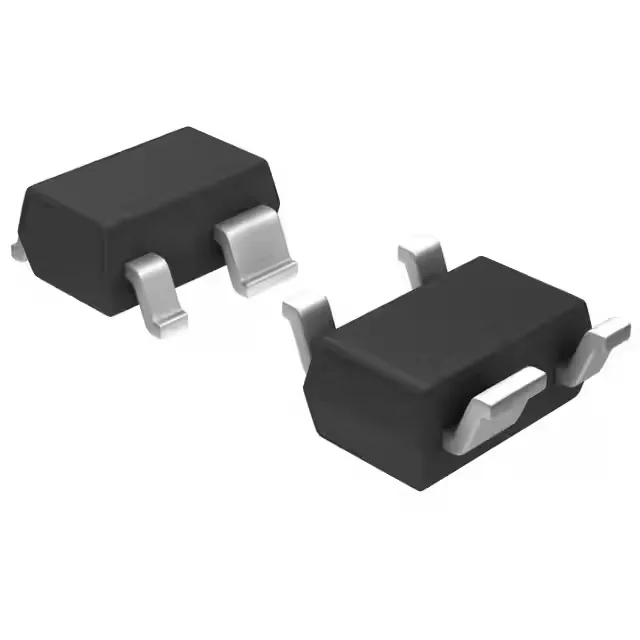
The Infineon BFP720H6327XTSA1 is a silicon-germanium carbon (SiGe:C) NPN RF bipolar transistor built for low-noise amplification from VHF up through C-band. Its headline numbers are a 45 GHz transition frequency, a gain range of 10.5 dB to 28.5 dB depending on bias and frequency, and a noise figure that sits between 0.4 dB and 0.95 dB across 150 MHz to 10 GHz. Collector current is rated to 25 mA, with a Vceo breakdown of 4.7 V and maximum power dissipation of 100 mW.
Gain and noise figure — what drives the selection
The gain isn't a single number because it depends on how you bias the transistor and at what frequency you operate it. At a given collector current you get a certain gain; the 10.5 dB to 28.5 dB range covers the practical operating window. The noise figure is equally dependent on bias — the 0.4 dB to 0.95 dB spread across 150 MHz to 10 GHz means you can tune for minimum NF at your band of interest. For a 2.4 GHz ISM-band LNA, for example, you'd bias for the lower end of that NF range and accept the gain that comes with it. The 45 GHz fT gives you enough headroom that the transistor doesn't limit your gain at those frequencies — the device's own speed is well above the operating band.
Package and field replacement
The BFP720 comes in a standard SC-82A / SOT-343 package, specifically the PG-SOT343-4-2 variant from Infineon. If you're doing field repair, a hot-air station set to 300 °C with a small nozzle will lift it cleanly. The marking on the package (typically a two-character code) identifies the variant, so check the reel label if you're pulling from stock. No special ESD precautions beyond the usual for a silicon RF transistor — grounded workstation, wrist strap, the standard kit.
No NRND or EOL flags, no last-time-buy pressure.