What this pre-biased PNP is for
This eliminates the external resistor pair normally needed for a common-emitter switch configuration. It is qualified to AEC-Q101, making it suitable for automotive environments such as engine control units, body electronics, and sensor interfaces where a compact, reliable low-side driver is needed. The 500 mA collector current rating and 50 V collector-emitter breakdown voltage cover typical relay, solenoid, and LED drive loads in 12 V and 24 V vehicle electrical systems.
With a maximum collector current of 500 mA and a Vce breakdown of 50 V, this transistor can switch loads like small relays, indicator LEDs, or logic-level solenoids directly from a microcontroller GPIO. The 300 mV saturation voltage at 50 mA collector current (with 2.5 mA base drive) keeps conduction losses low in the on-state. The 150 MHz transition frequency is high enough for PWM dimming or switching up to several hundred kilohertz, though the pre-biased design is typically used in saturated switching rather than linear amplification.
Integrated resistors save board space
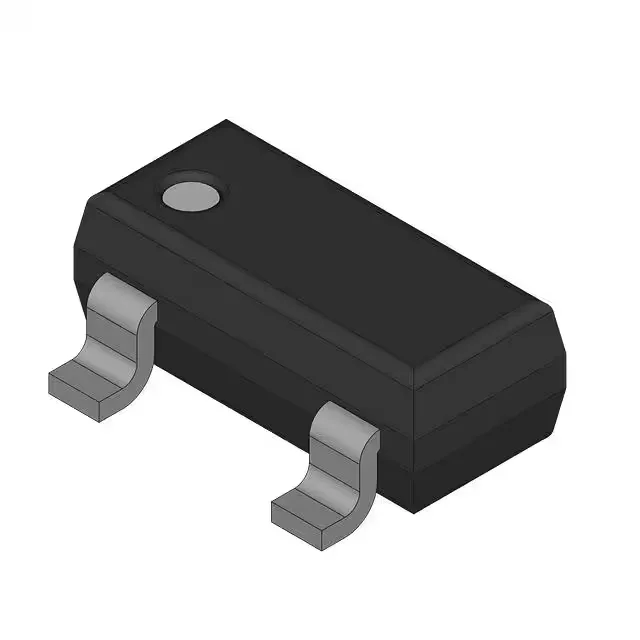
The BCR583 integrates both the base resistor (R1) and the base-emitter resistor (R2), each 10 kΩ. This reduces component count by two per transistor and shrinks the footprint to a single SOT-23 package. For a multi-channel output stage — say, driving eight indicator LEDs — the board area saving is meaningful. The PG-SOT23-3-1 package is the standard three-lead SOT-23 outline, compatible with existing footprints for discrete PNP transistors.
The AEC-Q101 qualification means it is already released for automotive PPAP-level submissions, which shortens the qualification cycle for new designs targeting automotive end equipment.