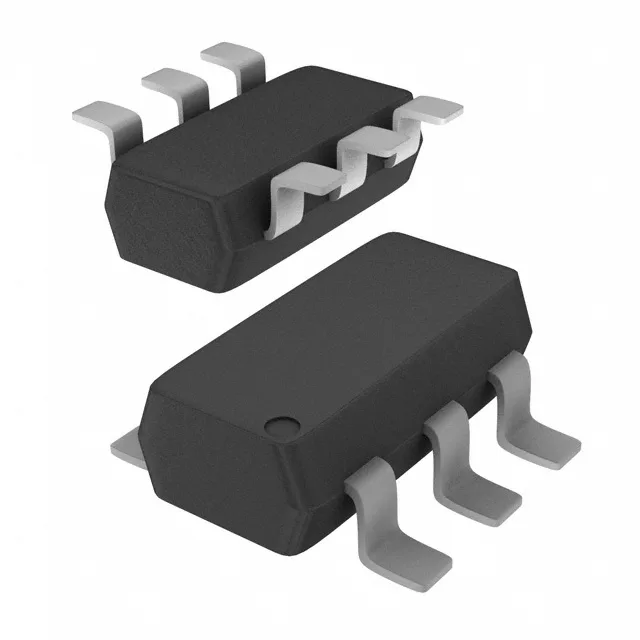
Linear LED driver for automotive lighting
The Infineon BCR320UE6327HTSA1 is a linear constant-current LED driver designed for lighting and signage applications, with an automotive-grade qualification that makes it suitable for exterior and interior automotive lighting modules. It integrates the switching element internally and delivers a regulated 250 mA per channel to the LED string, with a 16 V output ceiling and a maximum supply input of 25 V.
250 mA per channel — sizing the LED load
The 250 mA per-channel rating sets the maximum continuous LED current. In a typical automotive taillight or interior ambient-light string, that current drives a single high-brightness LED or a small parallel pair. The linear regulation means the pass element dissipates the voltage drop between supply and LED forward voltage as heat, so the thermal budget in the SC-74 package limits how much headroom you can burn at full current. For a 12 V nominal system with a 3 V LED forward drop, the 9 V drop at 250 mA is 2.25 W — that exceeds the package's dissipation without a thermal pad. In practice, keep the supply-to-LED differential under a few volts, or derate the current, to stay inside the package's safe operating area.
AEC-Q101 and the automotive BOM line
That certification is the gate for Tier-1 suppliers and OEMs who require the part to be listed on their approved vendor list. The active lifecycle status confirms Infineon is still manufacturing it — no last-time-buy risk for current production runs. For non-automotive builds (signage, general lighting), the same qualification gives a margin of reliability beyond commercial-grade parts.
Package and footprint — SC-74 (PG-SC74-6)
The part comes in the SC-74 (SOT-457) package, designated PG-SC74-6 by Infineon. It is a six-lead surface-mount package suited for automated pick-and-place. The small footprint keeps the board area tight, but as noted, the thermal dissipation is limited — the exposed pad is absent, so all heat exits through the leads and the PCB copper.