What this PNP pre-biased transistor does for your board
The base resistor (R1) and the emitter-base resistor (R2) are both 10 kOhms, which sets a predictable on-threshold and provides a built-in pull-down to keep the transistor off when the drive signal is floating.
200 MHz transition frequency — what it buys you
The 200 MHz transition frequency (fT) means the transistor can switch at moderate speeds — think PWM dimming of an LED at tens of kilohertz, or toggling a small signal relay without noticeable delay. It is not a high-speed logic-level switch, but for the 100 mA collector current range the fT is more than adequate for most control loops and indicator drivers.
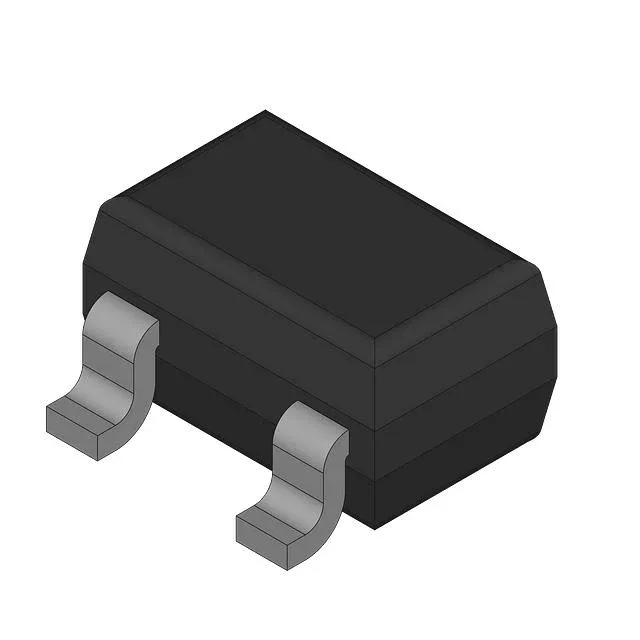
Package and footprint: SOT-323
Housed in a SC-70 / SOT-323 case (Infineon calls it PG-SOT323-3-1), this is a three-lead surface-mount package with a 1.3 mm pitch. For a 100 mA load at 2.5 V Vce you are at 250 mW, right at the limit; derate if ambient temperature climbs above 25 °C.