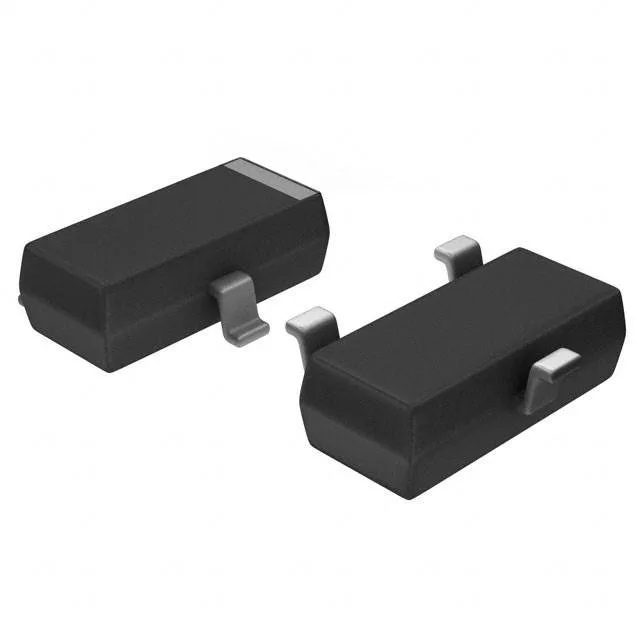
Pre-biased PNP — what the integrated resistors buy you
The Infineon BCR158E6327HTSA1 is a PNP pre-biased transistor in a SOT-23 package, with a 2.2 kΩ base resistor (R1) and a 47 kΩ emitter-base resistor (R2) integrated on-chip. That pair of resistors eliminates two external passives from the BOM, which matters when you are populating a dense board — motor-drive gate pre-drivers, relay coil drivers, or logic-level interface buffers where every component counts.
Infineon has placed the BCR158E6327HTSA1 in Last Buy status. That means the manufacturer is no longer accepting unlimited orders; the production window is closing, and once the final allocation is exhausted, this exact order code will not be available through the factory channel. For a BOM that depends on this pre-biased PNP, the decision is straightforward: secure the remaining inventory now through independent distribution, or qualify a replacement before the stock dries up. The base product number is BCR158, so any alternate within that family shares the same SOT-23 footprint and integrated resistor values — but the Last Buy clock is running on this specific suffix.
50 V, 100 mA — where this transistor fits
The 50 V VCEO and 100 mA IC(max) define the safe operating area: this is not a power transistor. It is sized for the signal-level switching you find in industrial control I/O, PLC output stages, small relay or solenoid drivers, and base-drive circuits for larger bipolar transistors. The 200 mW power dissipation limit reinforces that — keep the junction temperature under control by staying within the 100 mA continuous rating and derating for ambient above 25 °C. The 200 MHz transition frequency is high enough for PWM frequencies in the tens of kilohertz without noticeable switching loss.