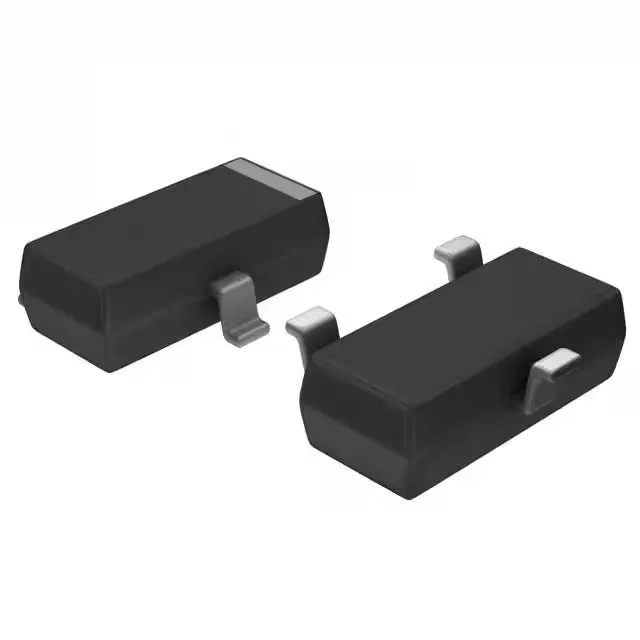
The BCR116E6433HTMA1 is an Infineon NPN pre-biased transistor in a PG-SOT23 package, carrying a Last Buy lifecycle status. That means the manufacturer has scheduled end-of-production; remaining stock is finite and being drawn down. If you're repairing a board that uses this part, the scorch mark tells you which transistor failed — but the real question is whether you can get a genuine replacement before the channel dries up.
What the bias resistors do for your circuit
The integrated bias network — a 4.7 kΩ base resistor (R1) and a 47 kΩ emitter-base resistor (R2) — saves two external passives and shrinks the footprint to a single SOT-23. The R1/R2 ratio sets the turn-on threshold: with a 5 V logic drive, the base current is limited by R1, while R2 provides a bleed path to keep the transistor off when the drive is low. This is the same internal divider used across the BCR116 family, so if you're cross-referencing a replacement, those resistor values are the first thing to match.
Ratings that decide the fit
Collector-emitter breakdown is 50 V, and continuous collector current is rated 100 mA — comfortable for low-side switching of relays, LEDs, or small solenoids in 12 V or 24 V industrial logic. The 150 MHz transition frequency means it handles PWM into the low-MHz range without noticeable storage-time lag. Maximum power dissipation is 200 mW in the SOT-23 package — derate if ambient exceeds 25 °C or if the board has poor airflow.