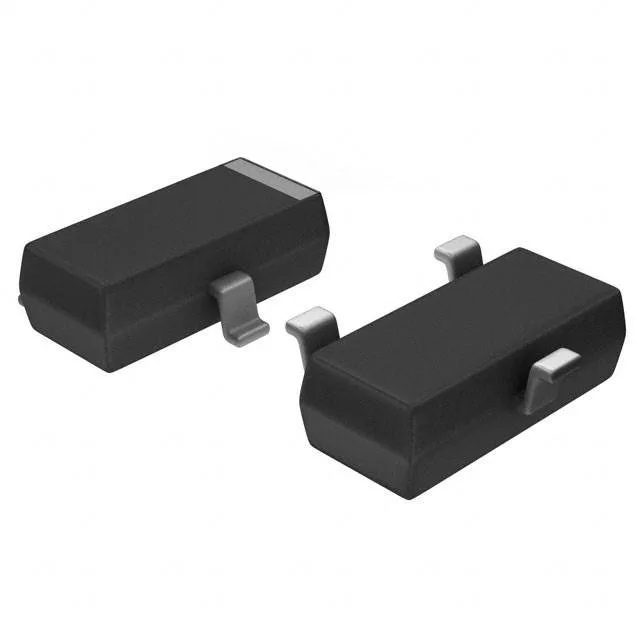
Infineon Technologies BAR66E6327HTSA1

Infineon BAR66E6327HTSA1 PIN Diode, 150V, SOT-23-3

MPNBAR66E6327HTSA1
End of Life

Infineon BAR66E6327HTSA1 PIN diode, 1 pair series connection, 150V peak reverse, 200 mA max, 1.8Ω @ 5mA/100MHz, 0.6pF @ 35V/1MHz, 250 mW, SOT-23-3 package, active.

$0.45Ref. price · indicative, final on quote
PackagingTO-236-3, SC-59, SOT-23-3
RoHSROHS3 Compliant
Independent supplier — new & surplus stockAuthenticity-screened · ESD-safe packingListing updated Jul 2026

Specifications

BAR66E6327HTSA1 specifications
ParameterValue
Diode typePIN - 1 Pair Series Connection
Voltage - peak reverse150V
Current - max200 mA
Power dissipation250 mW
PackageTape & Reel (TR); Cut Tape (CT)
CaseTO-236-3, SC-59, SOT-23-3
Resistance @ if,1.8Ohm @ 5mA, 100MHz
Capacitance @ vr,0.6pF @ 35V, 1MHz

Product details

RF PIN diode in a SOT-23-3 pair

The Infineon BAR66E6327HTSA1 is a silicon PIN diode configured as a single pair in series connection, housed in a PG-SOT23 package. It is designed for RF switching, attenuator, and limiter circuits where low capacitance and low series resistance at forward bias are required. Typical applications include antenna switch modules, variable attenuators in base-station and handset front-ends, and RF limiter stages for receiver protection. The part is rated for a peak reverse voltage of 150V and a maximum forward current of 200 mA, with a power dissipation limit of 250 mW.

The 0.6 pF capacitance at 35 V reverse bias (measured at 1 MHz) keeps off-state insertion low through UHF and low-microwave bands. The 1.8 Ω series resistance at 5 mA and 100 MHz defines on-state insertion loss.

The BAR66E6327HTSA1 uses the standard SOT-23-3 footprint (TO-236-3 / SC-59 variant), with the supplier device package designated PG-SOT23. This is a widely used three-lead surface-mount package compatible with automated pick-and-place assembly.

Frequently asked questions

What is the BAR66E6327HTSA1 used for?

It is a PIN diode in a series-pair configuration for RF switching, attenuator, and limiter circuits in wireless infrastructure, test equipment, and RF front-end modules.