CD4017BF
Harris Corporation
MOQ 1 · Bulk · RoHS · EIA-481 · DAP/DDP · T/T
Technical specifications
| Parameter / Attribute | Specification / Value |
|---|---|
| Logic type | Counter, Decade |
| Trigger type | Positive Edge |
| Mounting | Through Hole |
| Supply voltage | 3 V ~ 18 V |
| Operating temperature | -55°C~125°C(TA) |
| Reset | Synchronous |
| Timing | Synchronous |
| Package | Bulk |
| Direction | Up |
| Count rate | 11 MHz |
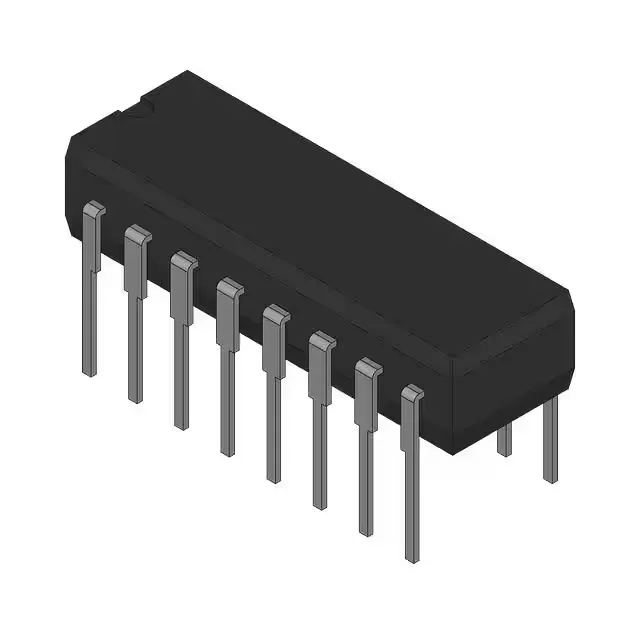
| Case | 16-CDIP (0.300\", 7.62mm) |
| Number of elements | 1 |
| Number of bits per element | 5 |
Need Stock or a Drop-in Second-Source for CD4017BF?
Package: DIP-16 / SOIC-16 · Pin-compatible replacements with immediate Shenzhen spot stock
The CD4017 is the LED chaser: a divide-by-ten Johnson counter with ten decoded outputs that walk one at a time - the chip behind running lights, sequencers, toy logic and a hundred beginner circuits, still sold in the millions as kits, and still repaired on old appliance and signage boards. The 4000B ecosystem makes sourcing calm: HEF4017, MC14017, TC4017 and the whole letter-soup row are the same die and pinout by standard. The one real confusion sits next door - the CD4022, its divide-by-eight sibling in the same 16-pin body with a different output pin map. Same family, same controls, different dance.
Verified Pin-Compatible Replacements (3 verified alternatives)
Pin-Pure 4000B Second Source
Shenzhen Spot Stock (24-48h Dispatch)
The Nexperia 4017: divide-by-ten Johnson counter, ten decoded outputs plus carry, clock/inhibit/reset control - the same JEDEC pinout the whole 4000B row follows.
3V to 15V family window; anti-lock gating and the Schmitt clock input included.
The Classical Second Source
Shenzhen Spot Stock (24-48h Dispatch)
The Motorola-line 4017 - the part many of these boards were originally built with, same die class and pinout.
Same 3V to 15V window.
The Divide-by-Eight Sibling - Same Body, Different Map
Shenzhen Spot Stock (24-48h Dispatch)
The 4-stage divide-by-eight member: eight decoded outputs plus carry, identical control set (clock, inhibit, reset) in the same 16-pin family.
Same 4000B window.
Buyer & Quality Checklist for Sourcing Alternatives
- Within the 4000B row the pinout is standard: CD4017, HEF4017B, MC14017B, TC4017 and the rest swap pin-for-pin - the letter prefixes are fabs, not functions.
- CD4017 against CD4022: ten outputs against eight, same controls, different output pin map. Verify the count against the circuit before ordering the sibling.
- The decoded outputs are one-at-a-time (Johnson walk) with anti-lock gating: sequencing circuits depend on that exclusivity, and a substituted plain binary counter would misbehave completely.
- Decoding on the 4022/4017 families happens on the chip; chaining uses the carry-out into the next clock - long chasers are built by cascade, not by wider parts.
- The reset is active high and resets to the Q0 position: circuits using partial-count resets wire an output back to reset - that feedback defines the effective cycle length, and it travels with the board, not the chip.
- 4000B outputs are weak by modern standards (mA class at 5V): driving LEDs directly works with series resistors, driving anything more needs a transistor or buffer stage.
Frequently Asked Technical Questions
Q: Is CD4017 the same as HEF4017 or MC14017?
A: Yes - the 4000B standard makes them pin-for-pin and function-for-function identical: CD4017, HEF4017B, MC14017B, TC4017 and the rest are the same die across manufacturer prefixes.
Q: What is the difference between CD4017 and CD4022?
A: Count length and output map: the 4017 is divide-by-ten with ten decoded outputs, the 4022 divide-by-eight with eight - same 16-pin body and controls, different output pin assignments. They are not interchangeable parts.
Q: Can the CD4017 drive LEDs directly?
A: One per output with a series resistor yes, within the weak 4000B drive: a few milliamps per output at 5V. Segment strings or heavier loads want a buffer or transistor stage - the chip sequences, it does not power.