Link budget and RF parametric fit
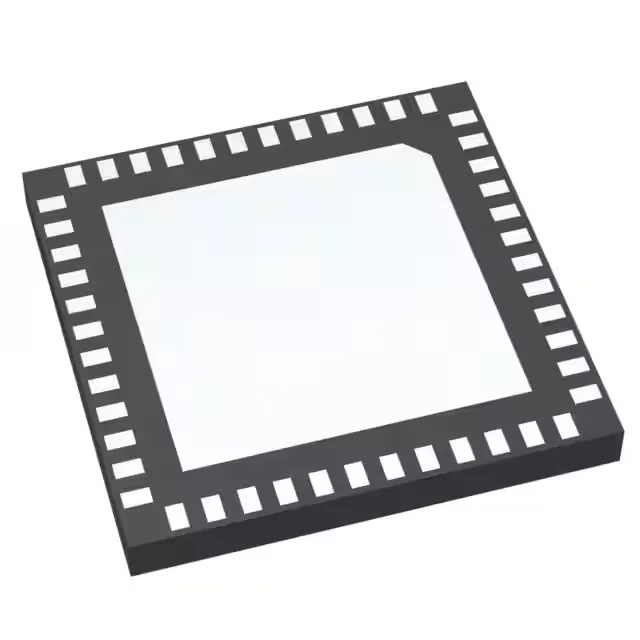
The ESP32-PICO-V3-02-ES delivers 19.5 dBm conducted output power and a -97 dBm receive sensitivity in 802.11b/g/n and Bluetooth v4.2 modes across the 2.412-2.484 GHz ISM band. Range is a link budget: at 19.5 dBm TX with a 2 dBi antenna and a -90 dBm receiver threshold (leaving 7 dB fade margin), the free-space path loss budget is roughly 111.5 dB, translating to about 350 m line-of-sight before the SNR floor is reached. The real-world range will be lower due to building penetration and multipath, but the RF front-end has headroom for a well-matched antenna. Current draw is 111-117 mA in receive and 205-385 mA during transmit, depending on the output power back-off and protocol. At the 19.5 dBm max setting, expect the higher end of that TX current — the thermal budget in the 48-LFQFN exposed-pad package assumes the ground paddle is soldered to a copper plane for heat spreading. The 3-3.6 V supply range is standard for a single-cell Li-Po with a 3.3 V LDO, though the peak current draw demands a regulator with at least 500 mA capability and low dropout at 3.0 V.
On-chip memory and peripheral headroom
With 448 kB of ROM and 520 kB of on-chip SRAM, this SoC runs the WiFi stack and BLE controller from internal memory, leaving roughly 320 kB of SRAM for the application heap and stack after the RTOS and protocol buffers are allocated. The serial interface set — ADC, GPIO, I²C, I²S, SDIO, SPI, PWM, UART — covers the common sensor, display, and storage peripherals without an external MCU. The SDIO interface is particularly useful for connecting an external flash or SD card for OTA firmware staging.