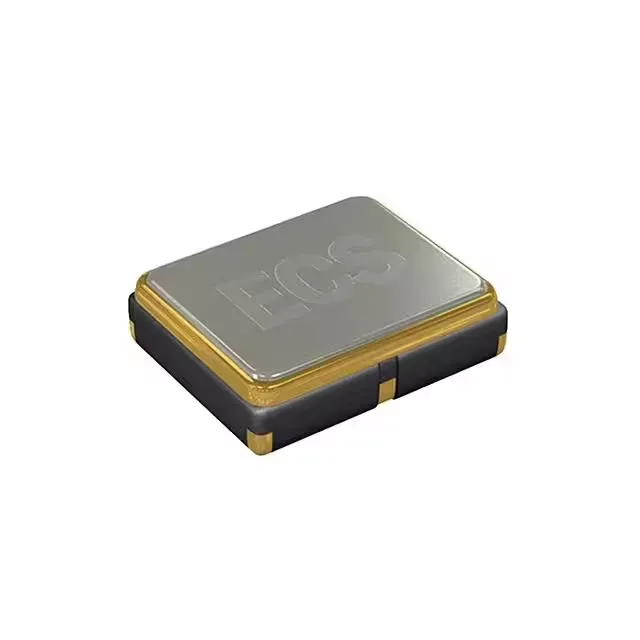
48 MHz HCMOS at 1.6–3.6 V — the MultiVolt advantage
The ECS-2520MV-480-CM-TR: The 48 MHz fundamental frequency lands squarely in the range most ARM Cortex-M microcontrollers use as a direct PLL input — a clean 48 MHz clock feeds a fractional divider down to standard USB full-speed 12 MHz, CAN bit timings, and common UART baud rates without requiring an external PLL stage. When the part is disabled the output goes high-Z; the maximum supply current of 8 mA drops to a sleep-level draw, which matters for battery-backed designs where the clock tree is the dominant idle load.
Stability, temperature grade, and output drive
±25ppm frequency stability is the standard grade for commercial XO oscillators — adequate for UART and SPI timing budgets, USB full-speed clock tolerance (±2000 ppm), and general MCU clock trees. For GPS or telecoms backhaul timing look to a TCXO; for this part the grade is general-purpose. It is not the -40°C start or the 85°C sustained ceiling of an industrial grade, so verify the enclosure thermal profile before committing this part to a motor-drive cubicle or an outdoor enclosure. HCMOS output provides logic-level drive compatible with standard MCU clock inputs — the 48 MHz output presents a square wave at the target logic threshold, which is what a microcontroller PLL expects at its reference pin. The Enable/Disable pin is a CMOS logic input; it does not require an open-drain or pull-down arrangement.
Package footprint and board-fit checklist
Both orientations are standard; verify the pick-and-place nozzle diameter matches the 2.5 mm body width.