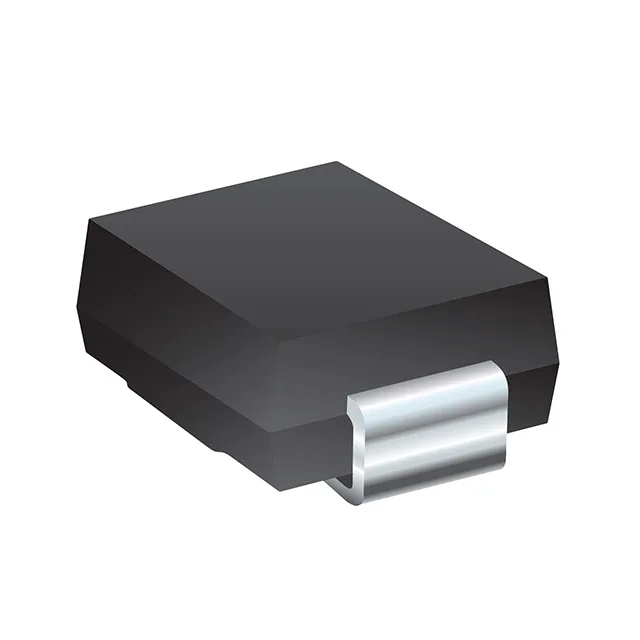
75V standoff, 5kW peak — telecom rail protection in SMC
The 5-0SMDJ75A: The 5 kW peak pulse rating defines the surge energy the device absorbs in a single event — for a telecom line card operating at 48V nominal, this headroom above the 75V standoff gives the downstream circuitry time to survive the surge before the TVS clamps.
What the clamping spec means for circuit protection
The minimum breakdown of 83.3V sits below the 121V clamping ceiling — that 37.7V window is where the TVS transitions from high-impedance blocking to low-impedance clamping. The downstream circuit sees the clamped level, not the raw surge, and the peak pulse current of 41.4A at 10/1000 µs tells you what the source impedance must be for the device to stay within its SOA on a given line. On a typical FR4 pad the Tj rise during a long-tail 8/20 µs event can approach the limit faster than the 10/1000 µs test wave, so check the transient thermal impedance curve if the application sees repeated surges.
Telecom fit and the DO-214AB SMC package
The unidirectional channel means it handles one polarity of surge only; a bidirectional threat profile requires a different configuration. Surface-mount DO-214AB SMC in tape-and-reel packaging suits high-volume pick-and-place assembly lines.
Active production, quoted to BOM quantity
Eaton - Electronics Division lists this part as Active.