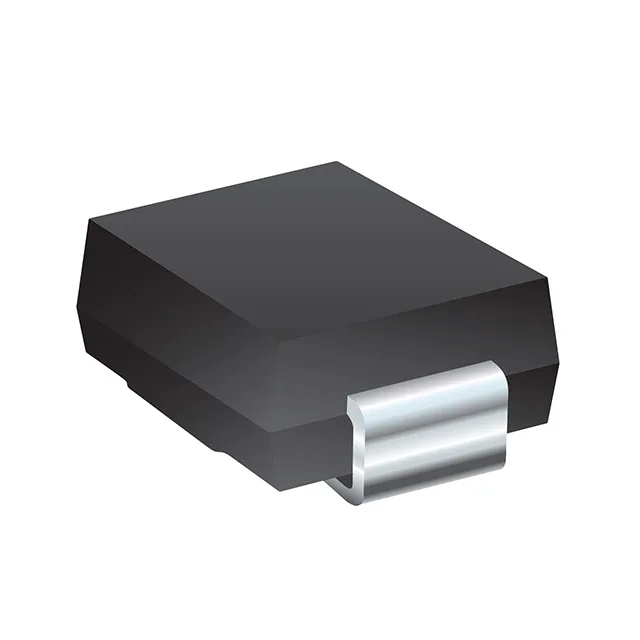
What the 5-0SMDJ30CA does in a telecom line
In telecom equipment, a TVS on a data or power rail clamps surge events to a safe level before they reach downstream ICs; the 30 V standoff means it sits cleanly across a 24 V nominal rail with margin.
The clamping chain — what each voltage means
The breakdown threshold is 33.3 V minimum: the device turns on when the transient pushes the line above that point. That 48.4 V ceiling at 103 A is the figure that protects the downstream semiconductor — the clamping voltage, not the standoff, is what the load sees during an event.
Telecom board integration
The DO-214AB (SMC) package with a wide junction-temperature range of -55°C to 150°C suits outdoor or uncontrolled-environment telecom enclosures where ambient can swing significantly; the thermal headroom matters because a TVS that clamps a surge dissipates the pulse energy as heat internally. The single bidirectional channel means it clamps both polarities — suitable for differential telecom signal lines where surges can reverse the polarity across the pair.