TVS protection window — what the voltage ratings mean
The 5-0SMDJ24CA: The 26.7V minimum breakdown is where it begins to conduct, and the 38.9V maximum clamping voltage at 129A peak pulse (10/1000 µs) is what the downstream circuit actually sees during a transient event — a telecom line card or base-station power rail that survives a surge钳位 at that level without damage.
5kW peak pulse — the spec that sizes the protection
5000W peak pulse is the transient energy the device absorbs in the 10/1000 µs waveform — this rating sets the device in the 5-0SMDJ series above lower-rated TVS families and is what makes it suited for outdoor telecom cabinets and remote radio units where lightning-induced surges exceed the handling of a 400W or 1500W part. The 129A peak pulse current confirms the clamping voltage is held within the 38.9V window at a realistic surge current, not a datasheet-only number.
SMC/DO-214AB package — what it connects to
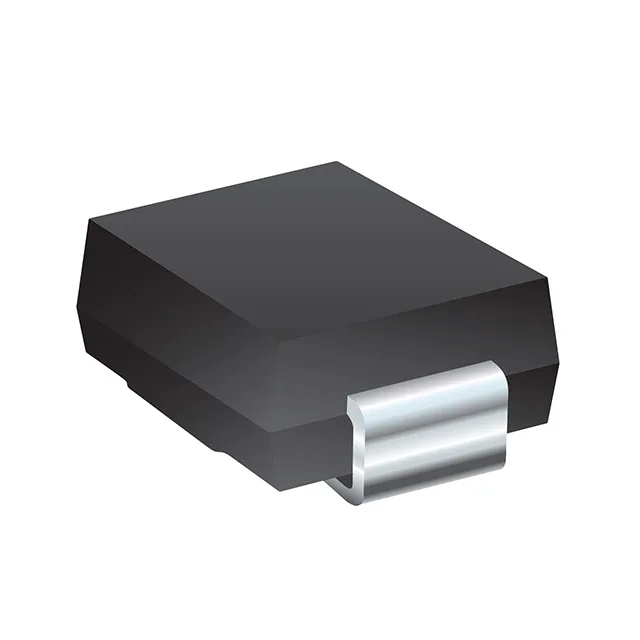
The SMC (DO-214AB) package mounts directly to the PCB pad with standard surface-mount assembly — the cathode band on the sleeve marks the polarity direction on the bidirectional part. At 150°C maximum junction temperature, the device tolerates a higher board-level thermal budget than a 125°C part, which matters in enclosed telecom enclosures where ambient can climb toward 85°C and the board-level delta-T adds on top.
The manufacturer lists this part as Active — it is a current-production line within the 5-0SMDJ series. Telecom OEM buyers using this in new designs can specify it with a standard BOM line; the DO-214AB SMC form factor is common across multiple TVS families so a cross-reference exists for second-source purposes, though the exact family-level alternative is confirmed at quote time against the specific voltage and peak pulse requirement.