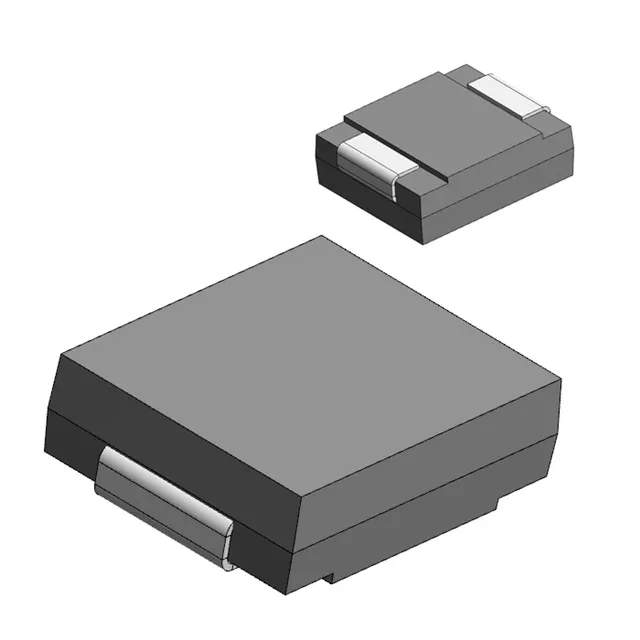
The 5-0SMDJ15CAH: At 15 V the device sits below its breakdown threshold — traffic passes cleanly. Once the line spikes above the 16.7 V minimum breakdown voltage, the diode clamps the transient hard to 24.4 V, limiting what reaches the protected IC. The CA polarity code confirms bidirectional polarity — two Zeners in reverse polarity across the line, which is the standard unidirectional TVS configuration for telecom and industrial line-card protection.
5 kW peak pulse capacity — the selection lever for telecom and automotive boards
A 5 kW device absorbs the energy of a longer-duration, higher-current transient without shifting its clamping voltage — the surge clips at the same 24.4 V ceiling whether the event lasts 10 µs or 1000 µs, which matters on outdoor telecom equipment where lightning-induced ring waves can last hundreds of microseconds. For telecom deployments this grade gives margin against thermal cycling failures that commercial-temperature TVS diodes are not screened for. Reflow-soldered surface-mount placement is standard; no through-hole hand-soldering needed on a production board.
The 5-0SMDJxxH series is a well-established telecom protection family; the series suffix determines the standoff voltage, so a BOM line calling this exact 15 V standoff part must not be substituted with a sibling from the same series without re-checking the protection voltage window.