Voltage ratings and the rail it protects
The 1.5KE27A-B: The 23.1 V reverse standoff voltage (V_RWM) is the DC operating level the TVS leaves alone — a 24 V nominal rail with 5 % tolerance sits at 25.2 V, which exceeds the standoff, so this part is marginal for a 24 V rail unless the regulation is tight. The minimum breakdown voltage is 25.7 V, and the clamping voltage at the 40 A peak pulse current (10/1000 µs waveform) is 37.5 V. That clamp voltage is what the downstream silicon must survive for the duration of the surge.
1500 W peak pulse — the surge-handling envelope
The 40 A peak pulse current at that waveform is the surge the part absorbs before the junction temperature hits the limit. For shorter transients (8/20 µs), the peak current capability is higher, but the datasheet's derating curve above 25 °C ambient must be applied — at 175 °C junction the power rating drops to zero.
Package and board-fit
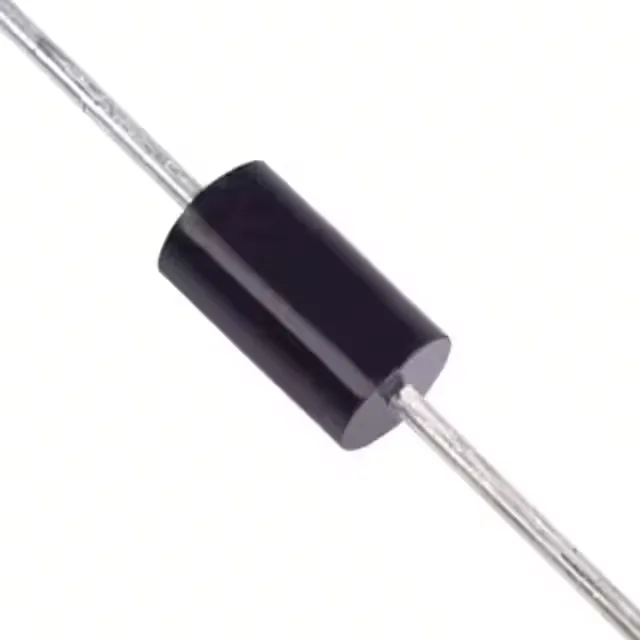
Through-hole axial package in the DO-201AA / DO-27 outline, with the supplier device package designated DO-201. The axial leads require a drilled PCB with lead spacing matching the hole pattern — no surface-mount reflow, so the assembly line needs a wave-solder or hand-solder step. Bulk packaging means the parts ship loose in a bag or tube, not on tape-and-reel for auto-insertion.
The TVS can sit in an engine bay, outdoor telecom cabinet, or avionics bay without derating for ambient extremes. The 175 °C max junction is higher than many plastic-packaged parts, which matters when the surge energy drives the die temperature up during the clamping event.
Sourcing posture for the 1.5KE27A-B
Because Diodes has marked the 1.5KE27A-B obsolete, the normal authorized-distributor channel no longer carries it as a stocked line. No pin-compatible direct replacement exists from Diodes under the same order code; a parametric search for a 1500 W, 23.1 V standoff, unidirectional TVS in DO-201 axial will yield functionally equivalent alternatives from other manufacturers, but the exact Diodes part is a spot-market item.