What the 1500W peak pulse rating means on the bench
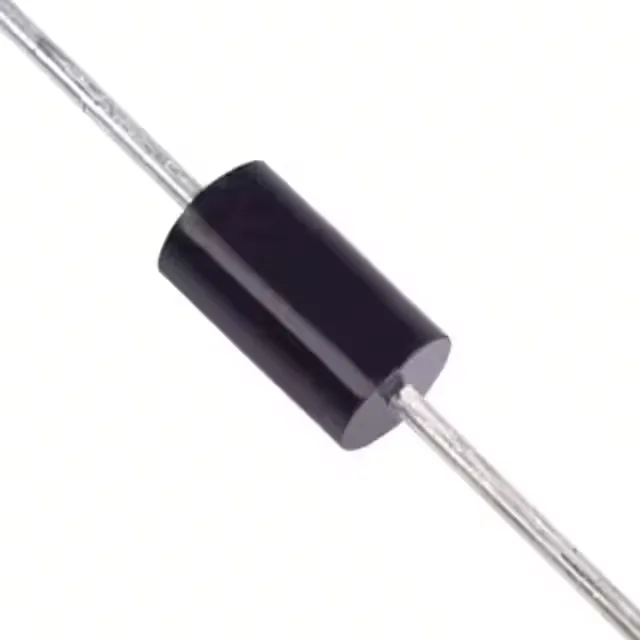
The 1.5KE11CA-B: That 1500W rating means it can clamp a transient up to 9A peak pulse current (Ipp) before the junction gives out — enough for industrial power rail protection where a 24V bus sees a 100V spike from an inductive load dump. Bidirectional (single channel) — clamps both polarities, so it sits across an AC line or a DC rail where reverse polarity is a risk. No power line protection, meaning it's designed for signal or low-energy power transients, not mains surge.
Clamping voltage and standoff — the fit decision
Reverse standoff voltage is 9.4V typical — the rail it protects should stay below this. Breakdown voltage minimum is 10.5V, so the diode starts conducting at that threshold. Clamping voltage max is 15.6V at Ipp — the protected circuit must survive that peak without latch-up or oxide rupture. That 175°C ceiling is typical for Zener TVS — the junction handles the pulse heat without secondary breakdown, but the solder joint at the axial lead sees the same thermal cycle. Through-hole DO-201AA/DO-27 package — easy to hand-rework on a prototype board, but the axial leads need a bit of lead-forming jig to fit a tight layout.
Obsolete — what that means for procurement
Marked obsolete by Diodes Incorporated. The base product number 1.5KE11 suggests the family may still have active variants (e.g., non-bidirectional or different package), but this specific -B suffix (bulk) and CA (bidirectional) combination is discontinued.