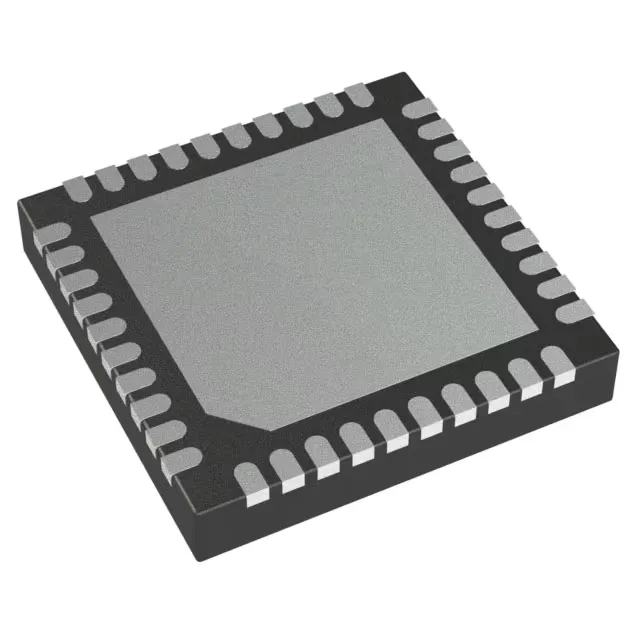
31.76 W per channel into 4 Ω — the load line that matters
The SSM3582ACPZ delivers 31.76 W per channel into a 4 Ω load, which is the headline number for matching it to a pair of bookshelf speakers or a small PA cabinet. That power level sits in the mid-power sweet spot — loud enough for a desktop monitor or a portable Bluetooth speaker, but not so high that the thermal management in a 40-LFCSP package becomes a board-level headache. It runs on a 4.5 V to 16 V supply rail, so it works from a single lithium-ion cell (nominal 3.7 V boosted to 5 V) all the way up to a 12 V lead-acid battery or a regulated 15 V brick. The wide input range means you don't need a separate pre-regulator for most battery-powered or automotive-adjacent designs.
Class D efficiency — why the heat sink stays small
As a Class D amplifier, the SSM3582ACPZ switches its output FETs at high frequency rather than dissipating the voltage drop across a linear pass device. Typical efficiency for a Class D amp in this power class runs above 85 %, which means the 40-LFCSP exposed pad can shed the waste heat into a copper pour on the PCB without a bolt-on heat sink. That matters for a compact stereo build where every millimeter of board space counts. The industrial temperature range (-40°C to 85°C) covers outdoor enclosures, automotive cabin installations, and factory-floor audio zones. The part is rated for continuous operation across that band, so a speaker sitting in a sun-baked equipment cabinet won't drift out of spec on a hot afternoon.
Tray vs reel — the only difference between SSM3582ACPZ and SSM3582ACPZ-R7
The SSM3582ACPZ ships in a tray, while the SSM3582ACPZ-R7 comes on tape and reel. The silicon inside is identical — same 31.76 W output, same 4.5-16 V supply range, same 40-LFCSP package. If your pick-and-place line feeds from reels, order the -R7 variant; if you hand-place or use a tray feeder, the tray version is fine. No PCB layout change, no BOM re-qualification needed.