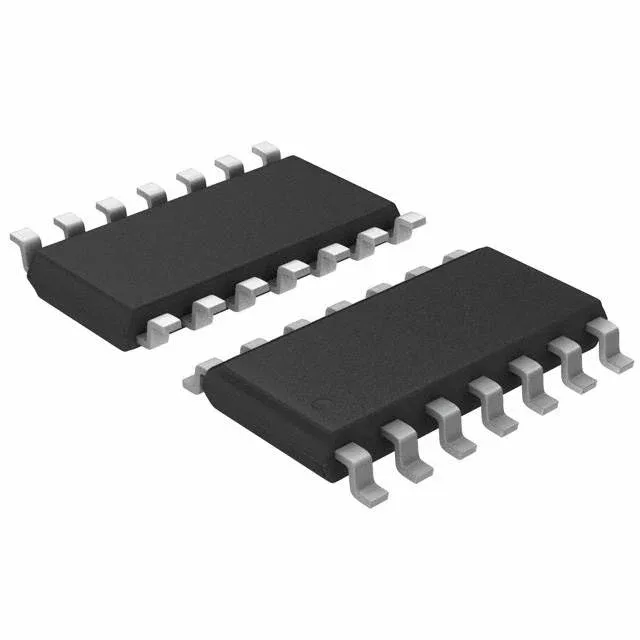
Analog Devices OP491GSZ — Analog & Data Acquisition

OP491GSZ Quad Rail-to-Rail Op-Amp, 3 MHz, 14-SOIC

MPNOP491GSZ
End of Life

Analog Devices OP491GSZ, quad general-purpose rail-to-rail output op-amp, 3 MHz gain bandwidth, 0.5 V/µs slew rate, 2.7 V to 12 V supply, 260 µA supply current, -40°C to 125°C, 14-SOIC package.

$11.26Ref. price · indicative, final on quote
Packaging14-SOIC (0.154", 3.90mm Width)
RoHSROHS3 Compliant
Independent supplier — new & surplus stockAuthenticity-screened · ESD-safe packingListing updated Aug 2026

Specifications

OP491GSZ specifications
ParameterValue
Output typeRail-to-Rail
MountingSurface Mount
Amplifier typeGeneral Purpose
Voltage - input offset80 µV
Voltage - supply span2.7 V
Current - supply260µA (x4 Channels)
Current - input bias30 nA
Current - output (Channel)16 mA
Operating temperature-40°C ~ 125°C
Gain bandwidth product3 MHz
PackageTube
Slew rate0.5V/µs
Case14-SOIC (0.154\", 3.90mm Width)
Number of circuits4

Product details

Quad op-amp for multi-channel sensor and signal conditioning

The OP491GSZ: The four independent amplifiers share a common supply range from 2.7 V to 12 V.

The entire quad draws 260 µA of supply current.

The output current capability of 16 mA per channel is enough to drive the reference input of a successive-approximation ADC or a small-signal relay coil through a transistor buffer.

For new designs, the quad-channel count and 2.7 V minimum supply make it a straightforward fit across multi-rail industrial and automotive PCBs.

Frequently asked questions

What is the OP491GSZ equivalent or replacement?

The evidence does not list an official direct replacement or second-source part. The AD8629ARMZ is a zero-drift dual op-amp with lower offset (1 µV) and lower bias current (30 pA), but it is a dual, not a quad, and operates on a minimum 2.7 V supply. The AD8227BRZ is a single instrumentation amplifier with a 250 kHz bandwidth. Neither is a pin-compatible quad replacement for the OP491GSZ. For a quad-channel general-purpose alternative, compare parts with the same 14-SOIC pinout, 3 MHz GBW, and rail-to-rail output.