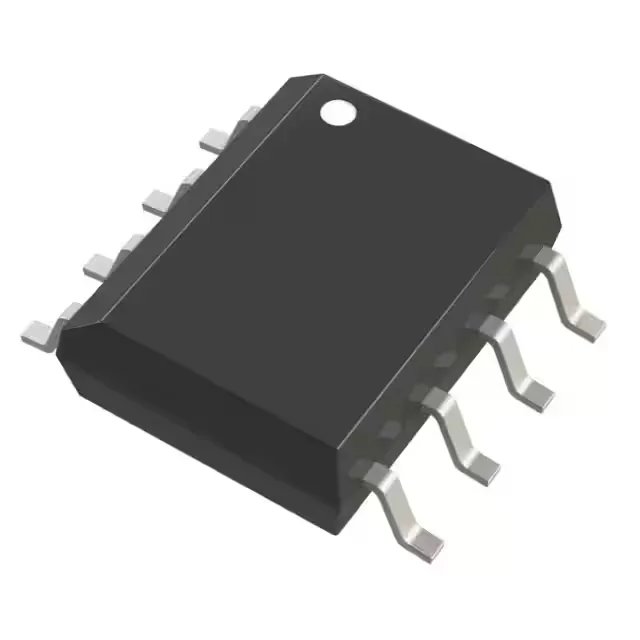
Analog Devices OP279GSZ — Logic ICs

OP279GSZ Buffer, Rail-to-Rail, 5 MHz, 3 V/µs

MPNOP279GSZ
End of Life

Analog Devices OP279GSZ, dual rail-to-rail buffer, 5 MHz gain bandwidth, 3 V/µs slew rate, 50 mA output per channel, 4.5 V to 12 V supply, -40°C to 85°C, 8-SOIC.

$4.89Ref. price · indicative, final on quote
Packaging8-SOIC (0.154", 3.90mm Width)
RoHSROHS3 Compliant
Independent supplier — new & surplus stockAuthenticity-screened · ESD-safe packingListing updated Aug 2026

Specifications

OP279GSZ specifications
ParameterValue
Output typeRail-to-Rail
MountingSurface Mount
Amplifier typeBuffer
Voltage - input offset4 mV
Voltage - supply span4.5 V
Current - input bias300 nA
Current - output (Channel)50 mA
Operating temperature-40°C ~ 85°C
Gain bandwidth product5 MHz
PackageTube
Slew rate3V/µs
Case8-SOIC (0.154\", 3.90mm Width)
Number of circuits2

Product details

Dual rail-to-rail buffer with 50 mA output

The Analog Devices OP279GSZ is a dual-channel rail-to-rail output buffer in an 8-SOIC package. It delivers 5 MHz gain bandwidth and a 3 V/µs slew rate, with each channel capable of sourcing or sinking 50 mA. This part is suited for driving coaxial cables, transformer-coupled loads, or as a line driver in industrial signal-conditioning chains where the output swing must reach the supply rails.

What the 50 mA output current buys you

Most rail-to-rail buffers top out around 20 mA to 30 mA per channel. The OP279GSZ's 50 mA rating means it can drive heavier loads — think 50 Ω back-terminated video lines, headphone outputs, or the input stage of a downstream ADC driver — without an external booster stage. The trade-off is input bias current of 300 nA and an input offset voltage up to 4 mV, which are modest but acceptable for buffer applications where DC precision is secondary to output drive.

Frequently asked questions

Can OP279GSZ be used as a voltage follower?

Yes, the OP279GSZ is a buffer amplifier, which is the same circuit topology as a unity-gain voltage follower. Its rail-to-rail output and 5 MHz gain bandwidth make it well-suited for that role.

What are the alternatives to OP279GSZ?

For a zero-drift precision buffer, the AD8629ARMZ offers 2.5 MHz GBW, 1 V/µs slew rate, and 1 µV offset, but only 30 mA output. For a differential output buffer, the AD8476BRMZ provides 5 MHz GBW and 10 V/µs slew rate, but is single-channel. For a quad general-purpose rail-to-rail buffer with 140 mA output, the AD8668ARUZ runs at 4 MHz GBW and 3.5 V/µs slew rate.