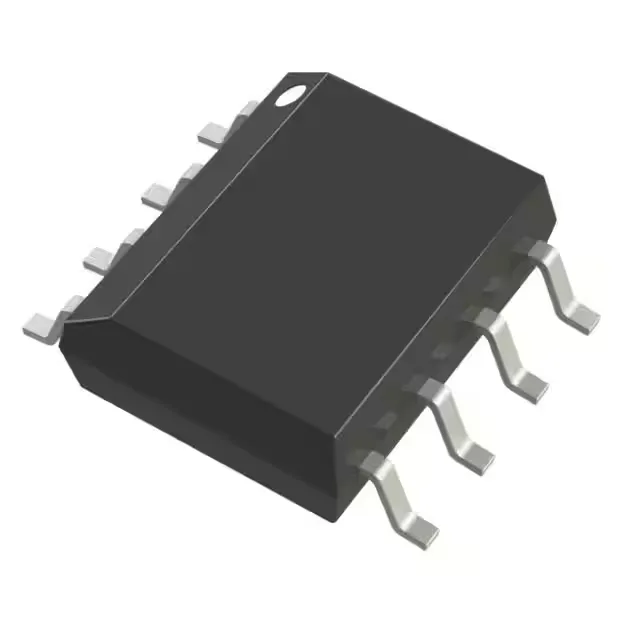
Analog Devices OP275GSZ-REEL — Analog & Data Acquisition

OP275GSZ-REEL Audio Dual Op-Amp, 22V/µs Slew Rate, 8-SOIC

MPNOP275GSZ-REEL
End of Life

Analog Devices OP275GSZ-REEL, dual audio operational amplifier, 22V/µs slew rate, 9 MHz gain-bandwidth product, 4mA supply current, 8-SOIC package, -40°C to 85°C operating temperature.

$3.96Ref. price · indicative, final on quote
Packaging8-SOIC (0.154", 3.90mm Width)
RoHSROHS3 Compliant
Independent supplier — new & surplus stockAuthenticity-screened · ESD-safe packingListing updated Aug 2026

Specifications

OP275GSZ-REEL specifications
ParameterValue
MountingSurface Mount
Amplifier typeAudio
Voltage - input offset1 mV
Voltage - supply span44 V
Current - supply4mA
Current - input bias100 nA
Current - output (Channel)90 mA
Operating temperature-40°C ~ 85°C
Gain bandwidth product9 MHz
PackageTape & Reel (TR); Cut Tape (CT)
Slew rate22V/µs
Case8-SOIC (0.154\", 3.90mm Width)
Number of circuits2

Product details

Audio op-amp with a 22 V/µs edge

It is designed for audio signal chains where slew rate matters—22 V/µs means it can track a full-amplitude 20 kHz sine wave without slewing into distortion, a common failure in slower general-purpose op-amps. The 9 MHz gain-bandwidth product gives enough loop gain to keep distortion low across the audio band, even with closed-loop gains of 10 or more. Supply current is 4 mA per amplifier, which is moderate for a dual audio op-amp—not the lowest quiescent, but a reasonable trade-off for the slew rate and noise performance typical of this family.

The 22 V/µs slew rate is the headline number that sets this part apart from generic dual op-amps like the LM833 or NE5532. In practice, it means the output can swing 10 V peak-to-peak in about 450 ns—enough to reproduce fast transients in guitar pedals, mixing console inserts, or ADC driver stages without rounding off the leading edge. The 1 mV input offset voltage is typical for a bipolar-input audio op-amp; if your design needs sub-millivolt DC accuracy, you would look at a precision part instead. Input bias current is 100 nA, which is fine for low-impedance audio sources but will cause offset drift if the source impedance is high (above 10 kΩ). The 90 mA output current per channel can drive headphones or line-level loads directly, though a dedicated headphone amplifier chip would handle lower impedances better.

The OP275GSZ-REEL operates from a split supply of ±4.5 V to ±22 V, or a single supply from 9 V to 44 V. That covers standard ±15 V audio rails and also single-supply designs like 12 V or 24 V industrial audio.

Package and sourcing note

The 8-SOIC footprint is a common, widely available package.

Frequently asked questions

What is the difference between OP275GSZ and OP275GSZ-REEL?

The die and performance are identical. The -REEL suffix indicates Tape & Reel packaging for automated assembly, while the base OP275GSZ typically ships in tubes or cut tape. The electrical specifications—22 V/µs slew rate, 9 MHz GBW, 4 mA supply—are the same across both suffixes.

Can I use OP275GSZ-REEL as a replacement for LM833?

Yes, the OP275GSZ-REEL is a pin-compatible dual audio op-amp in the same 8-SOIC footprint and can replace an LM833 in most audio circuits. The OP275 offers a higher slew rate (22 V/µs vs. 7 V/µs typical for LM833) and lower input bias current (100 nA vs. 500 nA typical). Verify the supply voltage range: the OP275 operates from 9 V to 44 V total, which covers the standard ±15 V rails used with LM833.