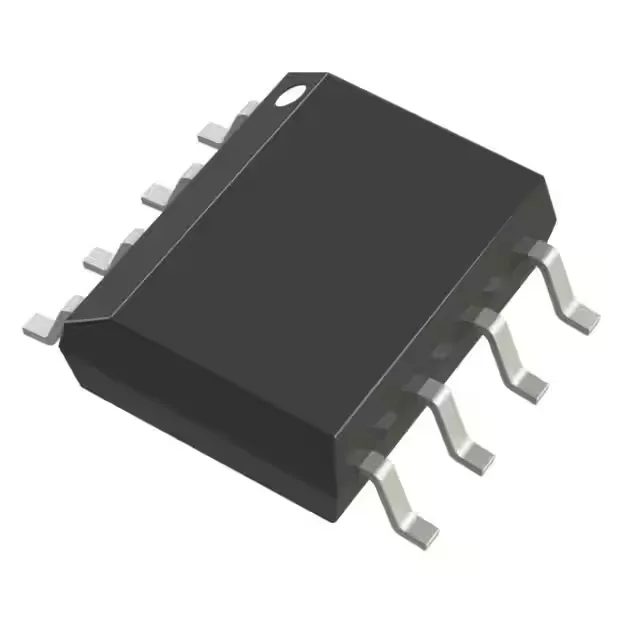
OP177GSZ-REEL

Analog Devices

Analog Devices OP177GSZ-REEL, General Purpose Amplifier, 1 Circuit, 8-SOIC, 600 kHz Gain Bandwidth, 0.3V/µs Slew Rate, 20 µV Input Offset, 1.6 mA Supply Current.

Analog Devices OP177GSZ-REEL
Download datasheet (PDF)
[IN STOCK] In Stock: 791 pcs
$3.64/ pc

Volume pricing

Buy Now

MOQ 1 · Tape & Reel (TR); Cut Tape (CT) · RoHS · EIA-481 · DAP/DDP · T/T

Technical specifications

OP177GSZ-REEL specifications
Parameter / AttributeSpecification / Value
MountingSurface Mount
Amplifier typeGeneral Purpose
Voltage - input offset20 µV
Voltage - supply span36 V
Current - supply1.6mA
Current - input bias1.2 nA
Operating temperature-40°C ~ 85°C
Gain bandwidth product600 kHz
PackageTape & Reel (TR); Cut Tape (CT)
Slew rate0.3V/µs
Case8-SOIC (0.154\", 3.90mm Width)
Number of circuits1
100% Footprint Match · Solder-Ready (No PCB Redesign Needed)

Need Stock or a Drop-in Second-Source for OP177GSZ-REEL?

Package: DIP-8 / SOIC-8 · Pin-compatible replacements with immediate Shenzhen spot stock

Footprint Match 98%
Supply Chain & Allocation Reality:

The OP07 is the precision op-amp that instrumented a generation of industrial measurement: 75 microvolts of maximum offset (wafer-trimmed, often needing no external nulling at all), 1.3 microvolts per degree of drift, and a place in thermocouple front ends, strain-gauge bridges and shunt amplifiers wherever a millivolt-class op-amp would drown the signal. Its history is the substitution map: Analog Devices positions it as the DIRECT replacement for the 741, the 725 and the 108A/308A class - the upgrade that removed the null potentiometer from every board it touched - and its own upgrade path runs through the pin-compatible OP77 (25 microvolts) and OP177 (10 microvolts). The repair failure this page exists for is the reverse move: a 741 fitted into an OP07 socket, which runs, passes a quick test, and quietly destroys the measurement.

Verified Pin-Compatible Replacements (3 verified alternatives)

OP177 Analog Devices DIP-8 / SOIC-8
100% Drop-in (Zero Code Change)
Availability & Target Pricing:

The Precision Upgrade - 10 Microvolts

Shenzhen Spot Stock (24-48h Dispatch)

Electrical & Core Specs:

The flagship of the trim ladder: about 10 microvolts of offset and 0.1 microvolts per degree of drift in the A grade - seven times tighter than the OP07 in both axes, in the same 8-pin socket.

Same +/-3V to +/-18V envelope and the same pin map.

Compatibility & Drop-In Notes: Upgrade-direction rule of the trim ladder: OP07 to OP77 to OP177 is monotone in precision at the same socket; there is never a reason to grade down when the tighter part is in the drawer.
Package & Solder Footprint: DIP-8 pin-identical.
Shenzhen Warehouse Stock & MOQ: Stocked; the drop-in precision ceiling.
OP77 Analog Devices DIP-8 / TO-99 / SOIC
100% Drop-in (Zero Code Change)
Availability & Target Pricing:

The Middle Step - 25 Microvolts

Shenzhen Spot Stock (24-48h Dispatch)

Electrical & Core Specs:

The middle grade of the same family: about 25 microvolts of offset and 0.3 microvolts per degree of drift - the step for designs that need better than the OP07 but not the OP177 price.

Same supply envelope and pin map.

Compatibility & Drop-In Notes: Same monotone ladder rule: fitting the middle grade where the original was the base OP07 is free precision; the reverse (OP07 into an OP77-calibrated front end) re-widens the error budget someone already spent.
Package & Solder Footprint: DIP-8, TO-99 and SOIC forms depending on the era of the board.
Shenzhen Warehouse Stock & MOQ: Stocked across the vintage bodies.
LM741 (the reverse direction) TI / STMicroelectronics / multiple DIP-8 / TO-99
Functional Equivalent
Availability & Target Pricing:

The Ancestor It Replaced - and the Repair That Reads Wrong

Shenzhen Spot Stock (24-48h Dispatch)

Electrical & Core Specs:

The history in one line: Analog Devices positions the OP07 as the direct replacement for the 741 (and the 725 / 108A class), wafer-trimmed so the old null potentiometer stays unused. The reverse fit still powers up - with millivolt-class offsets instead of microvolt ones.

Same socket and supply family; the error budget differs by two orders of magnitude.

Compatibility & Drop-In Notes: Repair discipline for precision sockets: match the offset class, not the pinout. Where the original was trim-class (microvolts), general-purpose parts (millivolts) are a different instrument - check the offset grade on any substitute entering a measurement path.
Package & Solder Footprint: Pin-compatible in both directions - which is exactly why the mistake gets made and shipped.
Shenzhen Warehouse Stock & MOQ: Stocked; but quote the precision class the measurement needs.
Buyer & Quality Checklist for Sourcing Alternatives
  • The 75-microvolt offset (and the 1.3 microvolts per degree drift) is the entire reason the part exists: instrumentation front ends were calibrated around it. General-purpose substitutes in the millivolt class run perfectly and destroy the measurement - match the offset class, not the pinout.
  • The grade letters only move the temperature window: OP07C covers about -40 to 85C, OP07E about 0 to 70C - same 75-microvolt family specs. Choose by the environment the board lives in, not by the price.
  • The historical replacement chain is documented: the OP07 was positioned as the direct socket replacement for the 741, 725 and 108A/308A class, removing the external null trim. Old boards with an unused null pot tell you an OP07-class part belongs there.
  • Wafer trimming means external nulling is usually unnecessary: a board whose output still sits off-zero with an OP07-class part fitted has a circuit problem (input network, leakage, thermocouples), not a nulling ritual pending.
  • The upgrade ladder OP07 to OP77 to OP177 is pin-compatible and monotone in precision (75, 25, 10 microvolts of offset): grade up freely; never grade down into a precision position without re-doing the error budget.
  • The part carries a not-recommended-for-new-designs status at the vendor: new instrumentation goes to the zero-drift chopper class. For repairs and restorations, the classic stays the answer - and the ladder above it stays the upgrade.
Frequently Asked Technical Questions

Q: Can I replace an OP07 with an LM741?

A: It fits and it runs - and it changes the instrument: millivolt-class offset against the microvolt-class original. In a measurement path that reads as a constant error or thermal drift after the repair. Precision sockets need precision substitutes.

Q: What is the difference between OP07C and OP07E?

A: Temperature windows only: the C grade covers about -40 to 85C, the E grade about 0 to 70C, with the same 75-microvolt offset family specifications. Pick by environment.

Q: What is the drop-in upgrade for an OP07?

A: The OP77 (about 25 microvolts of offset) or the OP177 (about 10 microvolts) - both pin-compatible DIP-8 parts that tighten the error budget monotonically without touching the circuit.

Technical details

It offers a gain-bandwidth product of 600 kHz and a slew rate of 0.3 V/µs, which together define its useful bandwidth for low-frequency amplification — think thermocouple or strain-gauge front-ends, not video or switching regulators. The input offset voltage is trimmed to 20 µV, and input bias current sits at 1.2 nA, so the part handles DC accuracy without external nulling in most designs. Supply range spans 6 V to 36 V single or dual supply, and the operating temperature covers -40°C to 85°C, making it suitable for industrial control cabinets and outdoor telecom enclosures.

The OP177GSZ-REEL comes in an 8-SOIC package (0.154" body width, 3.90 mm) and is specified for surface-mount assembly. The footprint matches the standard SOIC-8 land pattern — no special pad geometry needed. If you are hand-prototyping, the Cut Tape option gives you a few parts without committing to a full reel.

The 600 kHz gain-bandwidth product sets the frequency where the open-loop gain drops to unity.

OP177GSZ-REEL
[ALLOC] verified
Quote