It delivers 600 kHz gain-bandwidth product and 0.3 V/µs slew rate, with a maximum input offset voltage of 20 µV and input bias current of 1.2 nA.
ADI lists the OP177GSZ as Active. No NRND, no last-time-buy, no EOL notice.
Analog Devices
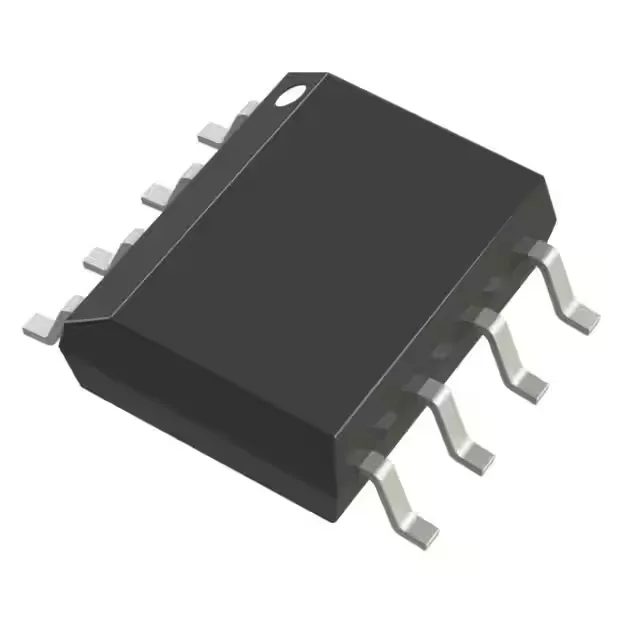
Analog Devices OP177GSZ, general-purpose op-amp, 1 circuit, 600 kHz gain bandwidth, 0.3 V/µs slew rate, 20 µV input offset, 1.2 nA bias, 6-36 V supply, -40 to 85°C, 8-SOIC surface-mount package, tube.
MOQ 1 · Tube · RoHS · EIA-481 · DAP/DDP · T/T
| Parameter / Attribute | Specification / Value |
|---|---|
| Mounting | Surface Mount |
| Amplifier type | General Purpose |
| Voltage - input offset | 20 µV |
| Voltage - supply span | 36 V |
| Current - supply | 1.6mA |
| Current - input bias | 1.2 nA |
| Operating temperature | -40°C ~ 85°C |
| Gain bandwidth product | 600 kHz |
| Package | Tube |
| Slew rate | 0.3V/µs |
| Case | 8-SOIC (0.154\", 3.90mm Width) |
| Number of circuits | 1 |
Package: DIP-8 / SOIC-8 · Pin-compatible replacements with immediate Shenzhen spot stock
The OP07 is the precision op-amp that instrumented a generation of industrial measurement: 75 microvolts of maximum offset (wafer-trimmed, often needing no external nulling at all), 1.3 microvolts per degree of drift, and a place in thermocouple front ends, strain-gauge bridges and shunt amplifiers wherever a millivolt-class op-amp would drown the signal. Its history is the substitution map: Analog Devices positions it as the DIRECT replacement for the 741, the 725 and the 108A/308A class - the upgrade that removed the null potentiometer from every board it touched - and its own upgrade path runs through the pin-compatible OP77 (25 microvolts) and OP177 (10 microvolts). The repair failure this page exists for is the reverse move: a 741 fitted into an OP07 socket, which runs, passes a quick test, and quietly destroys the measurement.
The Precision Upgrade - 10 Microvolts
Shenzhen Spot Stock (24-48h Dispatch)
The flagship of the trim ladder: about 10 microvolts of offset and 0.1 microvolts per degree of drift in the A grade - seven times tighter than the OP07 in both axes, in the same 8-pin socket.
Same +/-3V to +/-18V envelope and the same pin map.
The Middle Step - 25 Microvolts
Shenzhen Spot Stock (24-48h Dispatch)
The middle grade of the same family: about 25 microvolts of offset and 0.3 microvolts per degree of drift - the step for designs that need better than the OP07 but not the OP177 price.
Same supply envelope and pin map.
The Ancestor It Replaced - and the Repair That Reads Wrong
Shenzhen Spot Stock (24-48h Dispatch)
The history in one line: Analog Devices positions the OP07 as the direct replacement for the 741 (and the 725 / 108A class), wafer-trimmed so the old null potentiometer stays unused. The reverse fit still powers up - with millivolt-class offsets instead of microvolt ones.
Same socket and supply family; the error budget differs by two orders of magnitude.
Q: Can I replace an OP07 with an LM741?
A: It fits and it runs - and it changes the instrument: millivolt-class offset against the microvolt-class original. In a measurement path that reads as a constant error or thermal drift after the repair. Precision sockets need precision substitutes.
Q: What is the difference between OP07C and OP07E?
A: Temperature windows only: the C grade covers about -40 to 85C, the E grade about 0 to 70C, with the same 75-microvolt offset family specifications. Pick by environment.
Q: What is the drop-in upgrade for an OP07?
A: The OP77 (about 25 microvolts of offset) or the OP177 (about 10 microvolts) - both pin-compatible DIP-8 parts that tighten the error budget monotonically without touching the circuit.
It delivers 600 kHz gain-bandwidth product and 0.3 V/µs slew rate, with a maximum input offset voltage of 20 µV and input bias current of 1.2 nA.
ADI lists the OP177GSZ as Active. No NRND, no last-time-buy, no EOL notice.