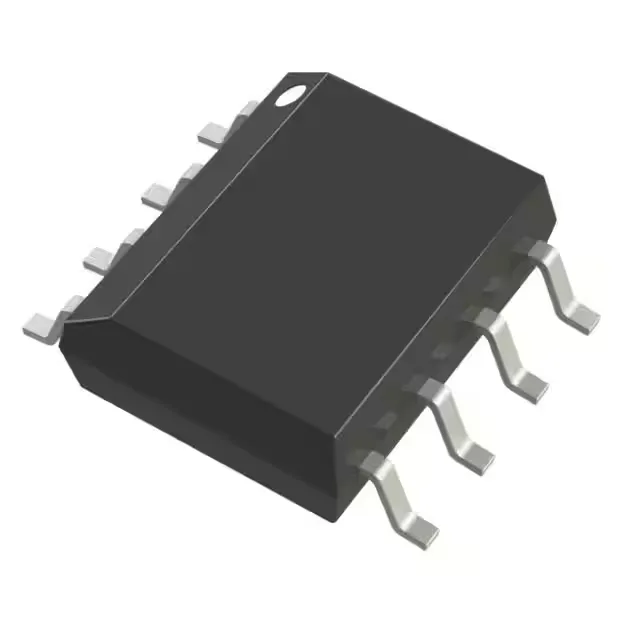
Analog Devices OP177FSZ-REEL7 — Memory (DRAM / SRAM / Flash / EEPROM)
Technical Documents PDF / CAD
RoHS Compliant · Lead-Free EIA-481 Standard
Analog Devices / Memory (DRAM / SRAM / Flash / EEPROM)

OP177FSZ-REEL7 General Purpose Op-Amp, 600 kHz, 8-SOIC

MPN OP177FSZ-REEL7
End of Life Spot Stock · 24-48h Dispatch 100% Original Sealed

Analog Devices OP177FSZ-REEL7 general-purpose operational amplifier, 600 kHz gain bandwidth, 0.3 V/µs slew rate, 10 µV input offset, single circuit, 8-SOIC package, Tape & Reel.

In Stock: 6,375 pcs
MOQ: 1 pcs
Logistics: DHL / FedEx DAP (Global Express · 3-7d) Russia & CIS DDP (Door-to-Door Cleared)
Dispatch: Shenzhen / HK
Unit Price (USD)
$9.08 / pc
Direct Purchase Ready
Volume Pricing Breaks Confirmed upon quotation
1+ pcs
$9.08
10+ pcs
$8.17
30+ pcs
$7.45
100+ pcs
$6.72
500+ pcs
$6.27
1,000+ pcs
$5.90
Working on a production BOM or have a target unit price? Submit Target Price
Buy Now

$9.08 / ea

6,375 in stock — maximum per order · 3–4 days lead time

$8.17 / ea from 10 pcs

Upload Full BOM List
[SPEC] Essential Parameters Snapshot Full Specifications (12)
Package / Case 8-SOIC (0.154", 3.90mm Width)
Supply Voltage 36 V
ALT
Facing long factory lead times or allocation on OP177FSZ-REEL7? Verified pin-compatible alternatives available with active Shenzhen stock and 100% solder-ready footprint match.

Full Technical Specifications

12 Parameters
OP177FSZ-REEL7 specifications
Parameter / AttributeSpecification / Value
MountingSurface Mount
Amplifier typeGeneral Purpose
Voltage - input offset10 µV
Voltage - supply span36 V
Current - supply1.6mA
Current - input bias1.2 nA
Operating temperature-40°C ~ 85°C
Gain bandwidth product600 kHz
PackageTape & Reel (TR); Cut Tape (CT)
Slew rate0.3V/µs
Case8-SOIC (0.154\", 3.90mm Width)
Number of circuits1
100% Footprint Match · Solder-Ready (No PCB Redesign Needed)

Need Stock or a Drop-in Second-Source for OP177FSZ-REEL7?

Package: DIP-8 / SOIC-8 · Pin-compatible replacements with immediate Shenzhen spot stock

Footprint Match 98%
Supply Chain & Allocation Reality:

The OP07 is the precision op-amp that instrumented a generation of industrial measurement: 75 microvolts of maximum offset (wafer-trimmed, often needing no external nulling at all), 1.3 microvolts per degree of drift, and a place in thermocouple front ends, strain-gauge bridges and shunt amplifiers wherever a millivolt-class op-amp would drown the signal. Its history is the substitution map: Analog Devices positions it as the DIRECT replacement for the 741, the 725 and the 108A/308A class - the upgrade that removed the null potentiometer from every board it touched - and its own upgrade path runs through the pin-compatible OP77 (25 microvolts) and OP177 (10 microvolts). The repair failure this page exists for is the reverse move: a 741 fitted into an OP07 socket, which runs, passes a quick test, and quietly destroys the measurement.

Verified Pin-Compatible Replacements (3 verified alternatives)

OP177 Analog Devices DIP-8 / SOIC-8
100% Drop-in (Zero Code Change)
Availability & Target Pricing:

The Precision Upgrade - 10 Microvolts

Shenzhen Spot Stock (24-48h Dispatch)

Electrical & Core Specs:

The flagship of the trim ladder: about 10 microvolts of offset and 0.1 microvolts per degree of drift in the A grade - seven times tighter than the OP07 in both axes, in the same 8-pin socket.

Same +/-3V to +/-18V envelope and the same pin map.

Compatibility & Drop-In Notes: Upgrade-direction rule of the trim ladder: OP07 to OP77 to OP177 is monotone in precision at the same socket; there is never a reason to grade down when the tighter part is in the drawer.
Package & Solder Footprint: DIP-8 pin-identical.
Shenzhen Warehouse Stock & MOQ: Stocked; the drop-in precision ceiling.
OP77 Analog Devices DIP-8 / TO-99 / SOIC
100% Drop-in (Zero Code Change)
Availability & Target Pricing:

The Middle Step - 25 Microvolts

Shenzhen Spot Stock (24-48h Dispatch)

Electrical & Core Specs:

The middle grade of the same family: about 25 microvolts of offset and 0.3 microvolts per degree of drift - the step for designs that need better than the OP07 but not the OP177 price.

Same supply envelope and pin map.

Compatibility & Drop-In Notes: Same monotone ladder rule: fitting the middle grade where the original was the base OP07 is free precision; the reverse (OP07 into an OP77-calibrated front end) re-widens the error budget someone already spent.
Package & Solder Footprint: DIP-8, TO-99 and SOIC forms depending on the era of the board.
Shenzhen Warehouse Stock & MOQ: Stocked across the vintage bodies.
LM741 (the reverse direction) TI / STMicroelectronics / multiple DIP-8 / TO-99
Functional Equivalent
Availability & Target Pricing:

The Ancestor It Replaced - and the Repair That Reads Wrong

Shenzhen Spot Stock (24-48h Dispatch)

Electrical & Core Specs:

The history in one line: Analog Devices positions the OP07 as the direct replacement for the 741 (and the 725 / 108A class), wafer-trimmed so the old null potentiometer stays unused. The reverse fit still powers up - with millivolt-class offsets instead of microvolt ones.

Same socket and supply family; the error budget differs by two orders of magnitude.

Compatibility & Drop-In Notes: Repair discipline for precision sockets: match the offset class, not the pinout. Where the original was trim-class (microvolts), general-purpose parts (millivolts) are a different instrument - check the offset grade on any substitute entering a measurement path.
Package & Solder Footprint: Pin-compatible in both directions - which is exactly why the mistake gets made and shipped.
Shenzhen Warehouse Stock & MOQ: Stocked; but quote the precision class the measurement needs.
Buyer & Quality Checklist for Sourcing Alternatives
  • The 75-microvolt offset (and the 1.3 microvolts per degree drift) is the entire reason the part exists: instrumentation front ends were calibrated around it. General-purpose substitutes in the millivolt class run perfectly and destroy the measurement - match the offset class, not the pinout.
  • The grade letters only move the temperature window: OP07C covers about -40 to 85C, OP07E about 0 to 70C - same 75-microvolt family specs. Choose by the environment the board lives in, not by the price.
  • The historical replacement chain is documented: the OP07 was positioned as the direct socket replacement for the 741, 725 and 108A/308A class, removing the external null trim. Old boards with an unused null pot tell you an OP07-class part belongs there.
  • Wafer trimming means external nulling is usually unnecessary: a board whose output still sits off-zero with an OP07-class part fitted has a circuit problem (input network, leakage, thermocouples), not a nulling ritual pending.
  • The upgrade ladder OP07 to OP77 to OP177 is pin-compatible and monotone in precision (75, 25, 10 microvolts of offset): grade up freely; never grade down into a precision position without re-doing the error budget.
  • The part carries a not-recommended-for-new-designs status at the vendor: new instrumentation goes to the zero-drift chopper class. For repairs and restorations, the classic stays the answer - and the ladder above it stays the upgrade.
Frequently Asked Technical Questions

Q: Can I replace an OP07 with an LM741?

A: It fits and it runs - and it changes the instrument: millivolt-class offset against the microvolt-class original. In a measurement path that reads as a constant error or thermal drift after the repair. Precision sockets need precision substitutes.

Q: What is the difference between OP07C and OP07E?

A: Temperature windows only: the C grade covers about -40 to 85C, the E grade about 0 to 70C, with the same 75-microvolt offset family specifications. Pick by environment.

Q: What is the drop-in upgrade for an OP07?

A: The OP77 (about 25 microvolts of offset) or the OP177 (about 10 microvolts) - both pin-compatible DIP-8 parts that tighten the error budget monotonically without touching the circuit.

Technical Details & Description

600 kHz gain-bandwidth — where the signal chain stays clean

The OP177FSZ-REEL7 is a single-channel general-purpose op-amp with a 600 kHz gain-bandwidth product. For a non-inverting stage with a gain of 10, that bandwidth collapses to about 60 kHz — enough for audio, sensor conditioning, and slow control loops, but not for video or high-speed data acquisition. Slew rate is 0.3 V/µs, which means the output can swing 3 V in 10 µs. That limits the full-power bandwidth to roughly 10 kHz at a 10 V peak-to-peak swing — fine for DC-coupled signals and low-frequency AC, but the output will slew-limit on a 20 kHz square wave.

10 µV offset — the DC precision that saves the trim pot

Input offset voltage is 10 µV typical, with 1.2 nA input bias current. That combination means a non-inverting stage with a 10 kΩ source resistor sees less than 12 µV of offset from bias current alone — the offset voltage dominates. No external nulling pot needed for most 12-bit or even 14-bit systems. Supply range spans 6 V to 36 V single or dual supply (±3 V to ±18 V). The 1.6 mA quiescent current per amplifier is moderate — not a micropower part, but not a power hog either. Good fit for industrial control boards where a single 24 V rail powers the analog front-end.

Active lifecycle — no last-time-buy scramble

Operating temperature range is -40°C to 85°C, which covers industrial enclosures and outdoor telecom cabinets. The 8-SOIC package with 0.154-inch body width is a standard footprint — same land pattern as the AD8622, AD623, and dozens of other single op-amps.

OP177FSZ-REEL7
Verified Allocation
Quote