600 kHz instrumentation amp in a socket-friendly DIP
The OP05EP is a single-channel instrumentation amplifier from Analog Devices, built for precision signal conditioning in the 0°C to 70°C commercial temperature range. Its 600 kHz bandwidth and 0.3 V/µs slew rate suit it for low-to-moderate frequency sensor front-ends — think strain-gauge bridges, thermocouple amplifiers, or medical transducer inputs where the signal of interest sits below a few hundred kilohertz. Input bias current is 1.2 nA typical and input offset voltage is 250 µV — both moderate figures for an instrumentation amp of this era, meaning the part can resolve millivolt-level signals without excessive drift, provided the source impedance is kept under a few hundred kilohms.
Supply rail flexibility and package fit
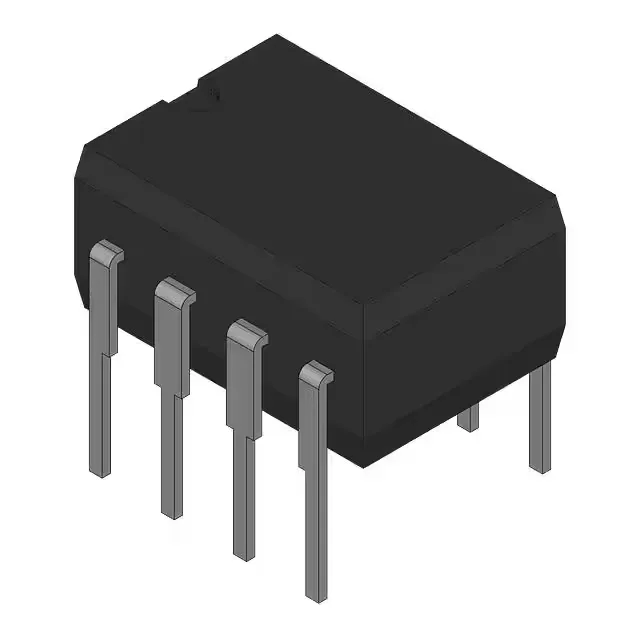
The OP05EP operates from a single supply as low as 6 V up to 36 V maximum, or from split rails (e.g., ±3 V to ±18 V). This wide supply span lets it drop into existing ±15 V analog front-end designs without a regulator change, or run from a single 12 V or 24 V industrial rail. Housed in an 8-pin DIP (0.300" width, 7.62 mm body), the OP05EP is through-hole mounted and socket-compatible. No lab bench or hot-air station needed — swap it on site with a standard DIP extractor. The wide pin spacing and large package also make hand-prototyping and rework straightforward. Packaged in bulk (loose tubes), not tape-and-reel. For a repair bench or low-volume build, bulk is actually easier — no reel fees, no minimum reel quantity to deal with.
Lifecycle and compliance — active but not RoHS
The OP05EP carries an active product status from Analog Devices — no end-of-life notice, no last-time-buy window to track. It remains a valid BOM line for both new designs and field replacements. Important compliance note: this part is RoHS non-compliant. The leads use a tin-lead solder finish, which is exempt for certain high-reliability or military applications but will not pass a RoHS-10 substance test. If your assembly line is RoHS-only, you will need a waiver or a leaded-solder process step.